The Power of Prayer
Ministries > The Alternative with Dr. Tony Evans
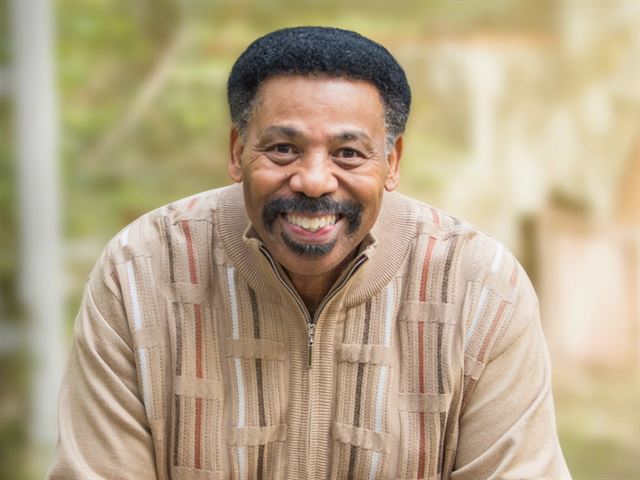
Patience is easier when you know the finish line is just ahead. But when the struggle seems to have no end, waiting on God can be hard. Dr. Tony Evans explains how to remain faithful when the waiting stretches on and life continues to test our patience.
References
Dr. Tony Evans: Far too many of us want to throw in the towel before we've thrown up the prayers.
Guest (Male): Dr. Tony Evans says Christians have a habit of underusing or overlooking our most valuable spiritual resource.
Dr. Tony Evans: Grace is available, but only at the throne, and you can only approach the throne through prayer.
Guest (Male): This is The Alternative broadcast, featuring the timeless biblical teachings from the archives of Dr. Tony Evans. All the electrical outlets in the world won't do you any good if you never plug anything in. Well, Dr. Evans says there's a spiritual parallel to that problem, one that can leave Christians living far below what God intends. Let's join him in James chapter five as he explains.
Dr. Tony Evans: Prayer is the most misunderstood and most neglected aspect of the Christian life. If you want to read the thermometer of your spiritual life, look at the thermostat setting on your prayer life. God has so constructed the world, he has so wired the world that he has said there are many things he will not do in the life of the Christian apart from prayer. First of all, let's look at the priority of prayer. Verse 13: "Is anyone among you suffering? Let him pray." That is, instead of complaining in verse nine, and instead of swearing, cussing, fussing, and making false oaths in verse 12, open your mouth, but not for those purposes. If you are going through affliction, let him pray. Now, what's very important is that what God wants, as he communicates through the apostle James, is that prayer should be the priority. That is the thing you should do. It should be first. It should be, listen to me, when you are going through trouble, prayer should be a knee-jerk reaction. What is prayer? Maybe we ought to start there. If we're going to prioritize it, what is it that we're prioritizing? Prayer is simply intimate communication with God. That's it. You don't need a $10 definition. Prayer is simply intimate communication with God. Far too many of us want to throw in the towel before we've thrown up the prayers. When you pray, what you are doing is gaining access to grace. Let me say that again, as the foundational statement and why you ought to prioritize prayer. Prayer accesses grace. Prayer does not necessarily mean the problem will go away, because the problem won't go away until God is finished teaching you the lesson that the problem was designed to teach you. So he is not saying pray so that you can get a magical disappearance of your problem. What he is saying, though, is in the midst of your affliction, your trial, your difficulty, pray that you might get the grace of God in order to deal with the problem that you have encountered. But grace is available only at the throne, and you can only approach the throne through prayer. Secondly, the people of prayer, verse 14. Here is one of our tough verses: "Is anyone among you sick? Let him call for the elders of the church, and let them pray over him, anointing him with oil in the name of the Lord." First of all, we've got to deal with this word "sick." The Greek word here for the word "sick" is the word "weak." It means weak. He says if the suffering of verse 13 is beginning to weaken you in verse 14, then you're going to need support, help, because your knees are beginning to buckle. When you have been weakened in any kind of category, you are to call the spiritual leadership of the church, and they are to come and buoy you up through prayer. They are to pray over him. And that is because the praying you could do in verse 13, you can't do in verse 14. See, in verse 13, you're doing the praying. But in verse 14, you're calling for help in the praying because it doesn't appear that the praying in verse 13 is achieving the goal, and you're finding yourself rather than getting stronger with your own prayers, you're getting weaker with your own prayers. Therefore, you need the prayers of other spiritual people to buoy you up. So the people of prayer, it's the church through the leadership that comes to bear. Then he comes to verse 15, point three, the promise of prayer: "And the prayer offered in faith will restore the one who is weary." That's what the word "sick" in verse 15 means. It means weary. Okay, we started off where he's suffering, but he's praying himself. In verse 14, he becomes weak, so he needs some help. By the time you get to him, he's weary. And there's not a person in here who hasn't been there. Just tired. Just wondering, is it worth it? Shouldn't I just go out and do it my way because God's way is taking too long? You're just tired of it. But yet you still got that faith. You still believe, you're just so tired. He gives you a promise, and this is one of the great promises of the New Testament. The prayer offered in faith will, will restore the one who is sick. Now folks, this is why this verse cannot just be referring to physical sickness. One, because if it was referring to only physical sickness, you'd never die. All you'd have to do is pray the prayer of faith, and every time you got sick, you'd get well. Number two, we know through scripture that it's God's will sometimes for sickness to occur in the life of the believer for his own purposes, like Job. Now don't ask me why, because I don't know why God does this with that person and that with the other person. I don't know that's his plan. All I know is we better be able to reach him when it happens. He says the prayer I'm talking about, when offered in faith, will pick up the one who is weary. That's the promise. God promises you, not necessarily he may bring the solution to the problem, but what he's promising you is divine encouragement in the midst of the problem. That's the problem. And you know, many of us could go a long way if we just get encouragement. Many of us could endure a whole lot if we'd just be encouraged. And that's what the church is to provide, a place of encouragement. The church can't solve all your problems. The church can't fix everything. People get mad at the church. Uh-uh, you better talk to God. But the church can help you reach God. It can encourage you, and the Lord will restore the weary one and raise him up. Raise him up from what? Whatever has caused the weariness. That's what he's saying. But he says it must be the prayer of faith. The prayer of faith. What is the prayer of faith? Well, according to First John chapter 5, verses 14 and 15, the prayer of faith is the prayer that is entrusting itself to the will of God. That's the prayer of faith. The prayer of faith is confident of what the will of God is. And the will of God is not for me to be miserable in my trials. The will of God is for me to count it all joy when I face all kind of trouble. I know that's the will of God because James has already told me that in chapter one. So I can say, Lord, I don't know whether it's your will for me to stay in this situation. I don't know how long, but I know James told me you want me to be joyful in it, and I am not joyful right now. In fact, I'm ticked off. I'm mad, but I know that this anger is not the will of God. Your giving me joy is the will of God, so I'm going to trust you to get it. Now here's the problem. Suppose your faith is too weak. You're supposed to pray the prayer of faith, and that will restore you, but maybe you don't have the faith to pray the prayer of faith. That's why you call on other people who are not going through the trial you're going through right now so you can piggyback on their faith. Mark chapter two tells a wonderful story. It talks about the sick man. He was physically weary. He was laid out on a pallet, and Jesus was teaching. Jesus is teaching, he's laid out on a pallet, and they said we got to get you to Jesus. Now he was too weak to get to Jesus by himself. And so what happened was the men came and lifted him and took him to the house where Jesus was teaching. Guess what they did? The house was too crowded. Too many people were there to hear Jesus preach, and they couldn't get to Jesus. So what they did was put rope around the man's pallet, got up on the roof, pulled the man up to the roof, cut a hole in the roof, let the man down through the roof in front of Jesus. And guess what Jesus said? The Bible says, "And when Jesus saw," here's the keyword, "their faith." Hold on now. He didn't see the sick man's faith. He didn't see the weak, the weary man's faith. He saw collective faith. He said he saw group faith. And when Jesus saw group faith, it says he took care of the weary man. Now listen to me. The other men didn't have a problem, at least not right then. They helped the other man get to it, but they were one of the reasons for the solution. Let me tell you why if you're a person who trusts God and you're not going through bad times you ought to help, because one day you're going to be the one on the pallet. One day you're going to be the one too weary to trust God. And the idea of having this small group nucleus of saints is so that you have a group who can take you to Jesus when you can't get there yourself.
Guest (Male): Dr. Evans will have more on the power of prayer when he returns with the second part of our lesson in just a moment. First, though, I want to tell you about a special resource package that can help you pursue the kind of wisdom and spiritual maturity we've been hearing about in James. It includes all 16 full-length messages in Tony's two-volume series called James: Time to Grow Up, along with his 30-day devotional book, Trusting God in Turbulent Times. Now the series will help you understand what mature Christian living looks like in the real world, while the devotional provides daily scripture and encouragement for trusting God through life's turbulent seasons. We'd like to send you this complete package as our thank-you gift when you make a contribution to support Tony's ministry. The audio collection is available on CD, USB flash drive, or instant digital download. Just visit tonyevans.org for the details and to make your donation and request. Or call 1-800-800-3222, where a team member is ready to help get this powerful package into your hands. This offer will only be available through tomorrow, so be sure to reach out right away. That number again, 1-800-800-3222, or online at tonyevans.org. Let's get back to part two of today's message right after this. On the Unbound podcast, Dr. Tony Evans brings honest stories to life. Guests bring thoughtful insights on topics like love, marriage, and how they relate to faith.
Guest (Female): There's something about being seen in your pain. I would not allow myself ever to admit how lonely I was.
Guest (Male): It's not wrong to ask God questions, it's wrong to question God.
Dr. Tony Evans: From broken marriages to restored homes, God still raises marriages from the dead.
Guest (Male): Unbound with Dr. Tony Evans. Listen and subscribe to the Unbound podcast on Dr. Evans' YouTube channel or on your favorite podcast platform. Let's get back to today's lesson now on the power of prayer. Tony is in James chapter five, verse 15.
Dr. Tony Evans: He goes on to say, I will raise him up, and if he has committed any sins, they will be forgiven. Now this is a very important phrase, "if he has committed any sin," because first of all, it means that all sickness is not tied to sin. The verb is perfect tense. Perfect tense in the Greek means past action with abiding results. In other words, one of the reasons you may be weary is your sinful lifestyle. That's not the only reason, because he says if you've committed sins. So maybe you haven't committed sin, you're just weary due to circumstance. But if you have committed sin, and you call the elders which he's previously said, admitting that what I'm going through could be because of my lifestyle right now, then if you're willing to deal with the lifestyle, God will remove the weariness that is the result of the lifestyle. But if you're not willing to deal with the lifestyle, don't pick up the telephone and call the elders because even they can't help you get to Jesus. If you're not willing to deal with sin, then you will not have access to Jesus Christ. The Bible says in First Corinthians 11, verse 30, because of sinful lifestyles of some of the saints, some are weak, some are sick, and some die young. So you can expect to be weary if you're not committed to dealing with sin. But all weariness is not due to sin. What this means, brothers and sisters, is that God will meet you in your struggle, and while he may or may not bring that struggle to an end depending upon his purposes, he will change you in the midst of it. Finally, the productivity of prayer: "Therefore, confess your sins to one another and pray for one another." He's now gone beyond the elders to the fellowship of the saints, one another. That you ought to have fellowship, small groups if you will, people who you relate to, to whom you can talk to, communicate with before sin has wiped you out if that is the problem to get sin dealt with in the life. But the question is who do you talk to? You only talk to people who can get a prayer through. You don't talk to everybody. And the Bible doesn't know anything about standing up in the middle of a congregation and letting out all your dirty laundry. That's not what he's talking about. He's talking about communicating with people who you can communicate your sins with who have the ability to reach God, which means they have to be spiritual. You don't go talking to carnal people. They need to talk to somebody, okay? They are people who can also pray. Why should we pray for one another? Because prayer works. The effectual prayer of the righteous man can accomplish much. The word effectual, which some of you have in your text, "effectual fervent," is from one Greek word, and the Greek word is where we get our English word energy from. He's talking now, watch this now, about energized praying. He's not talking about the kind of praying we do today. This is energized praying. Not, "Oh, I'm supposed to pray, let me hurry and get this over with and go." That's not energized praying. Energized praying, he says, prayer that has energy behind it can accomplish not a little bit, not a tiny bit. He says a whole lot. But he says it only applies to righteous people. That's why I want you to confess your sins. Unless you confess your sins and deal with sin, you're not going to be a righteous person, so you won't have an energized prayer. And if you don't have an energized prayer, you won't accomplish much concerning what you're praying about. The effectual prayer of a righteous man accomplishes much. This is not casual praying, perfunctory praying. It is prayer that comes from the gut. It's gut praying. Gut prayer, now when was the last time you had some gut praying? Like Hezekiah in Second Kings 20, verse 2 to 6, when he was pronounced terminal. Bible says he turned to the wall and he wept, and he said now God, the doctors have spoken, I have no way to live, but I call on heaven right now. And the Bible says and God heard the energized prayer. And the energized prayer gave him 15 more years. The energized prayer did what the perfunctory prayer can never do. And then he closes with this illustration. He says look at a man named Elijah. A man named Elijah. He said Elijah was a man of nature like ours. He was not from Krypton. He was an ordinary Joe. You say, but he was a prophet. Yeah, but he was an ordinary prophet. We know how ordinary he was because when he got out there and started doing stuff in Israel, Jezebel heard about it and ran him out of town, scared to death of the woman. Elijah was an ordinary man. James is saying he didn't have anything on any Christian under the sound of my book who's listening to the word. If you are a Christian in love with Jesus Christ today, Elijah had nothing on you. Ordinary man. But he became super-ordinary in prayer. Look at this now. Follow me closely as we conclude. "And he prayed earnestly." That's the energized prayer. That's the translation of a word that says he prayed in his praying. That's what the Greek reads. He prayed in his praying. He didn't just pray, inside of his prayer was prayer. All right, in other words, he got down with it. Got serious with it. He prayed in his prayer. He prayed earnestly that it might not rain, and it did not rain on the earth for six months. And he prayed again, and the sky poured forth rain and the earth produced its fruit. Now let's set the context. Israel was in sin. God was going to judge Israel because of its sin. Elijah got on his knees and says, "Your people are not following you, God. Let your people see your power. Close up heaven." Now you got to know what you're doing if you're going to shut down the sky. And guess what? An ordinary man shut down the sky. Not a super-ordinary man, an ordinary Joe shut down the sky. Now where did he get that from? He got it from Deuteronomy 11 because Deuteronomy 11 says when you fail to obey me, I'm going to close up the sky, there will be no rain on your crops. But if you return to me, I open up the sky, I will rain on your crops and your crops will begin to grow again. You know where he got that? He prayed biblically. He knew the word. You know the reason why we're not getting answers to prayer? Because we don't know what we're praying about. If you don't know the word, you won't know how to pray. Let me give you an example. Some people will go Philippians 4:19: "My God shall supply all my needs according to his riches in Christ Jesus," and you still poor. "My God will supply all my needs," and you still have needs not met. What happened? Did God lie? No, you didn't read the next verse. The next verse says where it says my God shall supply all my needs, but then the next verse says because you invested in the things of the Lord. So if you read 19 and skip the verses before it and the verses after it, you turn God into pop goes the weasel. God is not going to pop up just because you call. He says because you were concerned about me, that's when I pop up. I pop up because you know me. But look, if you don't know the word and all you know is Philippians 4:19 and you don't know anything else, then you won't see what God has to say. Elijah knew the word, so he prayed biblically. Not only did he pray biblically, but he prayed humbly. In chapter 18 of First Kings, verse 42, which tells this story, it says he got on his knees and put his head between his legs. Humbling himself. You see, that was a position of humility. He not only got on his knees, he bowed his head and put it between his knees. He not only did that, but he prayed persistently. In chapter 18, verse 43, of First Kings, it says that he prayed seven times. But not only did he pray specifically, verse 41, 43, and 44 teaches us he prayed expectantly. It was time for the drought to end, the people had repented, it was time for God to keep his promise and bring rain. Now watch this now. So he's praying, as he bows in prayer, "Lord, bring the rain." He sent his servants and said, "Is it raining yet?" They said, "No." "Let's pray. Lord, you promised to bring the rain, bring the rain." Send them back. "Is it raining yet?" "No." "Is it raining yet?" "No." "Is it raining yet?" "No." He got to the seventh time, God still hadn't said a word. It says at the seventh time, he sent the servants out. "Is it raining yet?" The servants came back and said, "No, it's not raining now, but way out there in the distance, there's this tiny little cloud that's no bigger than a man's hand. Way out there, way far out, I see this little cloud, but it's not raining, sky's blue." Elijah said, "Okay, grab your stuff, the sky's getting ready to bust out here." "Yeah, but we only see a tiny cloud." "Listen, the sky's going to bust." He told them the sky's going to bust. Bible says and in a few minutes, it poured because he prayed expecting to see something. And even when the something he saw didn't look like anything, he knew that God was good all the time. He knew that God was going to come through. So he prayed. So if you want to get ahold of God, we have to stop being double-minded. We have to stop living two ways at one time. We're going to have to stop believing man and believing God. And if you are too weak to believe God, call some spiritual people so they can believe God with you. And what, don't let him go till he answers you. God has three answers: Yes, No, and Slow. Yes, I'll give it to you. No, I won't give it to you. Or I will give it to you at some point, but you're going to have to wait on it. Whether it's yes, pray till you hear yes. Or no, pray till you hear no like Paul did. Or slow, keep praying till you hear something. Either way, God will do it.
Guest (Male): Dr. Tony Evans, talking about the importance of persistence and patience in prayer. Well, we only have one more lesson in Dr. Evans' exhaustive study of the book of James. But if you'd like to continue learning from this series, be sure to ask about getting the complete two-volume collection for yourself. It's called James: Time to Grow Up. All 16 full-length messages are included, giving you the opportunity to hear the complete lessons and revisit the biblical principles we've been exploring together. And as I mentioned earlier, in thanks for your contribution in support of The Alternative, we'll send you the complete audio collection along with an added bonus: Tony's 30-day devotional book, Trusting God in Turbulent Times. Together, these resources can help you develop the wisdom, perspective, and faith to navigate whatever comes your way. Visit tonyevans.org today to get the details and make your request. Or call our resource center at 1-800-800-3222 anytime of the day or night. That's tonyevans.org or by phone at 1-800-800-3222. We pay attention when people walk through the front doors of the church. But what about the ones who quietly walk out the back? Tomorrow, Dr. Evans reminds us that our responsibility doesn't end when someone drifts away from the faith. Be sure to join us for this powerful message on love and restoration.
Related Episodes
The Preservation of Backsliders
Friday, September 18
The Practice of Patience
Wednesday, September 16
The Powerlessness of Riches
Tuesday, September 15
Related Videos
About The Alternative
The Urban Alternative is the national ministry of Dr. Tony Evans and is dedicated to restoring hope and transforming lives through the proclamation and application of the Word of God.
About Dr. Tony Evans
Dr. Tony Evans is the founding pastor of Oak Cliff Bible Fellowship in Dallas, founder and president of The Urban Alternative and the author of over 150 books, booklets and Bible studies. Dr. Evans holds the honor of writing and publishing the first full-Bible commentary and study Bible by an African American. His radio broadcast, The Alternative with Dr. Tony Evans, can be heard on more than 1,200 US outlets daily and in more than 130 countries.
Contact The Alternative with Dr. Tony Evans
Mailing Address
The Urban Alternative
P.O. Box 4000
Dallas, TX 75208
Telephone
1-800-800-3222


