An Extraordinary Resurrection – Part 2 of 2
Ministries > Running To Win with Dr. Erwin W. Lutzer
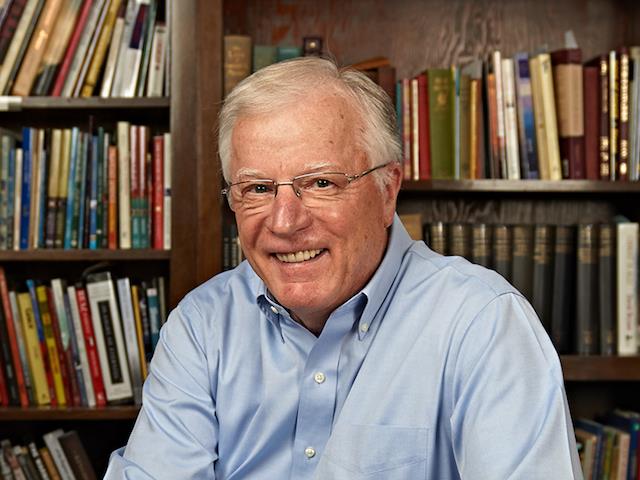
Honest doubt seeks answers, but unbelief kicks at what it knows. When a skeptic saw the risen Christ, he cried, “My Lord and my God!” In this message, Pastor Lutzer shows how great thinkers throughout history tried to seal Christ’s tomb. Is Jesus a liar, a lunatic, a legend, or Lord?
Host (Male): Let us run with endurance, the race that is set before us. Looking to Jesus, the founder and perfecter of our faith. We know the Olympic Games began in ancient Greece because historical writings tell us so. There is massive evidence that says Jesus rose from the dead. Christ's resurrection is as certain as any event in history. From the Moody Church in Chicago, this is Running to Win with Dr. Erwin Lutzer, whose clear teaching helps us make it across the finish line.
Dr. Erwin W. Lutzer: Pastor Lutzer, is the evidence for the resurrection of Jesus conclusive?
Dr. Erwin W. Lutzer: Well, Dave, you know, for some people, they simply dismiss it out of hand. They have no reason to do so, except that they have a desire to do so. They do not want to believe. But for those who are at least open to faith, absolutely, the evidence for the resurrection of Jesus Christ is overwhelming. I want to ask everyone listening this question. Do you share your faith with others? Yesterday, I was helping an older man struggling with some packages. And I said to him, "Isn't it interesting how God makes us realize that eternity is very close to us?" Because obviously, he was struggling physically, and he said, "Yes." I asked him whether or not he was ready for eternity, and he did not know. I explained the Gospel to him, why it is that he could believe. And then I prayed for him. And I told him to pray to Jesus Christ directly. Why? Because I know that Jesus Christ is the Savior of the world. Well, I certainly hope to see him in heaven. Now, I mentioned that because we here at Running to Win are so encouraged by letters that we receive from those who have come to saving faith in Jesus Christ. And at the end of this message, I'm going to be sharing one of those letters with you and also giving you an opportunity, a wonderful opportunity to help us get this message to others. For now, let us listen.
Dr. Erwin W. Lutzer: Now, of course, because unbelief reigns in the human heart, there have been people who have looked at the Bible and said, "Well, the tomb must have been empty." There are many who grant that, but they say, "The explanation for the empty tomb must be found somewhere else other than in a miracle." And so some people have said, "Well, the disciples stole the body." Remember that's what Pilate was worried about when he said, "You know, so that the disciples don't come and steal his body, set a watch." And they guarded the tomb. But I need to ask you something. If the disciples stole the body, they would not have laid down their lives for something they knew to be a hoax. People have laid down their lives for foolish causes, but not for things that they believed were foolish causes. Others have said, "Well, the enemies must have stolen the body." But if the enemies did it, they would have produced the body when on the day of Pentecost, Peter stood up and preached with such conviction about the resurrection of Jesus Christ. You see, it just does not work to say that the enemies stole it. And then, of course, a book came out many years ago, which I remember reading, if you are into fiction, it is a good book to read. And it illuminates the swoon theory. The idea is that Jesus really did not die on the cross, he just swooned and then he was put into that dark, cool tomb, and he was revived. And then he came staggering out on the third day with bloodstains all over his body and in a weakened condition. He inspired the disciples to begin the Christian Church, and he convinced them of his resurrection. Well, that is also unlikely. All theories regarding the empty tomb collapse under the weight of other evidence. Throughout history, not everybody has been happy with the resurrection and the deity of Jesus Christ, I can assure you of that. Not everybody has been glad because of it, right from the early centuries. Pilate said, "Let's put an end to this." And the Pharisees wanted to put an end to it. And when you think of Western civilization, some of our greatest thinkers who have impacted us the most are people who in effect said to themselves, "We want to keep Christ in that tomb." And in most instances, they have tried to keep him there by simply ignoring him, pretending that he had no relevance to their particular disciplines or their expertise. For example, David Hume took the stone called philosophy and said to himself, "We can use philosophy to keep that tomb closed." So Hume taught that miracles were impossible. He said the reason that miracles are impossible is because there is uniform evidence against them. Now if you have taken an introductory course in logic, you know that that is circular reasoning. He is beginning with the supposition that he wishes to prove. How can he know that there is uniform evidence against miracles? All that we can do is check them out and see whether they have happened. Now, what is a philosopher? The word philosophy means a lover of wisdom. How could David Hume, who supposedly loved wisdom, have bypassed Jesus Christ about whom the Bible says that in him are all the treasures of wisdom and knowledge? How could Hume have done that? Well, he tried to keep the tomb closed. What about Karl Marx? You know, Marx was born in the Rhineland of Germany and at the age of six baptized a Lutheran, and said very nice things about Jesus, and then teamed up with Engels and wrote the Communist Manifesto, and then to the British Museum, he wrote Das Kapital. Marx saw Jesus as totally irrelevant. He said that religion was the opiate, you remember, of the people. And so Marx thought that he would come up with an economic theory and with a political theory that would surely close Christ off and keep him dead. How could Marx have erred so profoundly? How can we possibly think that Christ can be kept from politics when the Bible says that the governments of the world shall be upon his shoulders and that someday he will rule, as it says in Psalm 2? And then, of course, we think of Freud. Freud thought that Jesus Christ was irrelevant. He believed that all belief in God was the figment of our imagination because all of us wanted a father figure, and so we made up the idea of God. And, of course, Freud thought that psychotherapy would answer all of our problems. Well, today, if you do any reading at all, you know that psychotherapy is on the couch. It is in desperate, desperate shape with hundreds of different theories. And Freud ignored Christ who is called in the Bible, the Wonderful Counselor, the Mighty God, the Everlasting Father, the Prince of Peace. And all that was ignored. What about Voltaire? Voltaire thought that he could take that stone that we would call the stone of culture, and he would put it across Christ's tomb. Voltaire was an enemy of the Church, and had some reason to be critical of the Church in his day, I might add. But unfortunately, his criticism of the Church closed him off from the possibility of believing in Christ. Voltaire predicted that in 100 years, the Bible would be obsolete. And yet I am told that his house in Europe was purchased by the Geneva Bible Society after he died as a headquarters to help spread the Bible throughout Europe. How could Voltaire have missed it? He is the Lily of the Valley, the Bright and the Morning Star. How do you take Christ and keep him in the tomb? And then what shall we say about Darwin whose tomb, I remember seeing in Great Britain. Darwin thought that he could take the stone that we call science. And if the theory of origins were looked at, he thought that one could do without God. Though he personally professed faith in God, subsequent scientists said, "We do not need God at all," and evolution explains origins. And so he took the stone of science and says, "Let us keep Christ sealed in the tomb." But, of course, today we know that evolution is in disarray. In fact, the editor of the French encyclopedia said evolution is a fairy tale for adults. Let me ask you something, how could Darwin have erred so terribly when it says regarding Jesus that he is the King of Science? For by him are all things created, both which are in heaven and which are on earth, whether they be thrones or dominions or principalities or powers. All things were created by him and for him. You cannot keep the King of Science in the tomb. What am I saying to you today? Well, kingdoms come and kingdoms go, but Christ lives. Emperors are crowned and emperors are uncrowned, but Christ lives. Skeptics live and I might add, skeptics die, but Christ lives, King of Kings and Lord of Lords. And now I invite you to turn in your Bibles to the story of a skeptic, John chapter 20. The basic outlines of this story are known to all of us. You remember Thomas, who was a pessimist, by the way, and he is not the first one who ever lived, nor is he the last. Let us give him credit for being a loyal skeptic. When Jesus was about to go back to the city of Jerusalem after the death of Lazarus, Thomas said, "Let us go that we may die with him." That is loyal skepticism. Evidently, he was a twin, Thomas called Didymus, that is what the word means, it means the twin. He was not with them when Jesus came. Verse 25, "The other disciples therefore said to him, 'We have seen the Lord.'" You can imagine the excitement. You see, Thomas missed a Sunday evening service. And if the Lord were to appear in our Sunday evening services, there would be a lot of people who would miss him. So Thomas was not there and he said and he did not accept the word of the disciples. He said, "Unless I shall see in his hand the print of the nails and put my finger into the print of the nails." And he says, "Unless I shall put my hand into his side, I for one am not going to believe." Now, may I say that Thomas was an honest doubter, and there is a difference between doubt and unbelief. You see, doubt stumbles over some stones that we do not understand, whereas unbelief often kicks at stones that we understand only too well. Because the evidence for Jesus Christ is so overwhelming that people who do not want to believe in him will fight against it with all of their being. And so Thomas should have believed, certainly he should have believed, for two reasons. First of all, Jesus predicted it. One day some people came to Christ and they said, "You know, do a sign that we might believe in you." And Jesus said, "You are not going to get any more signs." He said, "There is going to be one sign, and that is the sign of the prophet Jonah. Just as Jonah was three days and three nights in the heart of the earth, so shall the Son of Man be, but that is going to be the end of the signs, and then he will rise again." And that is it. Thomas should have thought about that because Jesus said that on numerous occasions according to the New Testament accounts. There is a second reason why he should have believed. This was an attorney's dream of all things. Ten people who all agree. Have you ever heard of that for a court case? Ten people who all agree. "We all saw him." Even if one person can hallucinate, it is unlikely that ten would have similar hallucinations at the same time. Thomas said, "That is not enough for me. Not enough for me." Isn't Jesus gracious? He could have said, "Well, Thomas, if you do not believe with all that evidence, well then, you know, forget it." But no, after eight days again, the disciples are together, and Jesus appears and he goes directly for Thomas, having known the doubt that existed in this melancholic heart. He says, "Thomas, reach hither thy finger and put it into my hand. And reach hither thy hand and thrust it into my side. And Thomas, do not be faithless, but believing." And Thomas looked into the eyes of Christ and said, "Body, face, scars. My Lord, my God. It's true. It is my Master." You say today, "Well, is the evidence for the resurrection of Jesus Christ as certain as mathematics, 2 + 2 = 4?" No, all of mathematics is actually based on the linking together of the conceptions of the mind. Historical evidence is different. Historical evidence cannot even be repeated. You cannot go back and say, "Well, we would like to videotape the resurrection." Sony was too late. The video camera cannot work back then. No, you cannot do that. The evidence for the resurrection of Jesus Christ is sufficient for any honest doubter. For any honest doubter. But it is not sufficient for a dishonest doubter. Well, let me ask you this question, who is Jesus Christ? Who is he among all the other so-called gods? The gods who say that they are God and yet deny that they are creators, the gods who say that all of us are gods, which is nonsense. Is there another like Christ? Who is he? Liar? When he said, "Before Abraham was, I am." Was he lying? When the high priest said to him, "Are thou the son of God?" And he says, "Thou sayest it." Liar? I do not think so. The man who preaches the Sermon on the Mount, a liar? Lunatic like Elbert Schweitzer said, the great humanitarian who said that Christ was insane because only insane people go around claiming to be God. Oh, you read the New Testament and you do not get that impression at all. Neither liar nor lunatic. Legend? Did the disciples make it up? No, the disciples themselves needed to be convinced of it. They would never have thought of making it up. Only one option left. Lord. Ha Kyrios mou kai ho Theos mou, says the Greek text. My Lord and my God. And then Jesus very graciously says something, and this is the closest you will ever come to having your name in the Bible. Would you like to have your name in the Bible? Well, there are some names that I would not necessarily like to be identified with in the Bible. But notice what Jesus says very graciously. "Thomas, because you have seen me, have you believed?" Yes, that is the answer. He had to see before he believed, but Jesus said, "Blessed are they who did not see and yet have believed." The closest you will ever come to your name in the Bible. What Jesus is saying is, "Blessed are you, Brad, because you did not see and yet you have believed. Blessed are you, Angie, because even though you did not see, yet you have believed." And our friend Dave sitting over there who is with us this morning, "Blessed are you, Dave, because you did not see and yet you have believed." And "Blessed are you, Gene and Julie. And blessed are you, whoever you may be, Terry, though you have not seen, you have believed." "My Lord, my God, my Savior." The gap between man and God is infinite. Absolutely, totally infinite, we explained this last time, and therefore God had to take the initiative to span the gap by himself, with no human help, to reconcile us and to lead us to himself. Only God could redeem us, and Christ is God. Let us pray. Our Father, we want to thank you today for the graciousness of Christ. We want to thank you that Paul wrote so eloquently that if Christ be not raised, our faith is vain. But we thank you that he also wrote that Christ is raised, that he appeared to 500 brethren simultaneously. Therefore, Father, we thank you for the certainty of our hope and our own resurrection, which is tied directly to his triumph. We pray today for those who have never received Christ as personal Savior, even those who heard this message and yet maintain an arm's length from a Savior who is God. In this moment, we pray that you will cause them to believe. Before I close this prayer, if you do not belong to Christ personally, would you at this moment embrace him as Lord and Savior, your Lord and Savior? This moment, you respond to him. Father, help us like Thomas to fully and finally and completely believe. In Jesus' name we pray. Amen.
Host (Male): This is Pastor Lutzer. Would you listen for a moment? I am holding in my hands a letter from an Arabic listener. And the reason, by the way, that she can hear Running to Win in Arabic is because Running to Win is in 50 countries in seven different languages, but just listen to this. She said, "I connected with Running to Win through an advertisement inviting people to talk about God. I felt a lot of anger and frustration toward God because I had so many unresolved questions. Through continued conversation, encouragement, and the Scriptures, I became more open spiritually and was eventually led in prayer to accept Jesus as my Savior. I now have renewed hope because God is our support, our helper in times of trouble." My friend, that testimony belongs to you. Running to Win is actually a listener-supported ministry, and because of people just like you, we receive these kinds of testimony. Would you consider becoming what we like to call an Endurance Partner? That is someone who stands with us regularly. Of course, you say, "Well, Pastor Lutzer, what is an Endurance Partner?" Here is what you do, you go to rtwoffer.com. That is rtwoffer.com and when you are there, you click on the Endurance Partner button. Or you can call us at 1-888-218-9337. By the way, when you are at rtwoffer.com, you will also notice that for a gift of any amount, we are making a very special book available for you entitled "Marx and Moody: Two Contemporaries, Two Gospels, Two Tombstones and One Choice." The book will help you to understand our present culture and the option that we face. Go to rtwoffer.com or call us at 1-888-218-9337.
Host (Male): It is time again for you to Ask Pastor Lutzer a question about the Bible or the Christian life. Since the Bible does not give many details, what happens in the life to come is always a matter of curiosity for the Christian. Lynette is a Running to Win listener who has this question: "When a loved one dies, especially an infant, and goes to heaven, will they be that age when we die or when Christ returns, so that we will know them? Or, in the case of an infant, will they have aged?"
Dr. Erwin W. Lutzer: Lynette, I want you to know that the Bible nowhere specifically says this, but I have a very deep conviction that indeed babies who die and go to heaven will not be babies throughout all of eternity. They may indeed grow up in heaven. Maybe they will even grow up in their mother's arms, but eventually, they will be adults because when you look at the Bible, you see all of the singing that goes on in heaven. You see people serving the Lord. These are the kinds of things that infants cannot do. So I think that they will be the same people that they were here on Earth, but they will have grown up. So that in heaven, there will not be any kinds of limitations put on anyone, but we will be able to worship with freedom and joy, and everyone be a part of the celebrations.
Host (Male): Thank you, Pastor Lutzer. Thank you, Lynette for that interesting question. If you would like to hear your question answered, go to our website at rtwoffer.com and click on Ask Pastor Lutzer or call us at 1-888-218-9337. That is 1-888-218-9337.
Host (Male): You can write to us at Running to Win, 1635 North LaSalle Boulevard, Chicago, Illinois, 60614. Running to Win is all about helping you find God's roadmap for your race of life. We know that Jesus is sitting even now at God's right hand. His ascension into Heaven opened its gates for us. Why is the ascension important? Next time on Running to Win, we will find that the ascension was the key to founding the Church, the body of Christ. Thanks for listening, for Pastor Erwin Lutzer, this is Dave McAlister. Running to Win is sponsored by the Moody Church.
Related Episodes
An Extraordinary Ascension – Part 1 of 2
Friday, September 18
An Extraordinary Resurrection – Part 1 of 2
Wednesday, September 16
An Extraordinary Death – Part 2 of 2
Tuesday, September 15
Related Videos

About Running To Win
Running the race of life is hard. But with the Bible front and center and a heart to encourage, Pastor Erwin Lutzer presents clear Bible teaching, helping you make it across the finish line. Since 2011, this 25-minute program has provided a Godward focus and features listeners’ questions.
About Dr. Erwin W. Lutzer
Dr. Erwin W. Lutzer is Pastor Emeritus of The Moody Church where he served as the Senior Pastor for 36 years (1980-2016). He earned a B.Th. from Winnipeg Bible College, a Th.M. from Dallas Theological Seminary, a M.A. in Philosophy from Loyola University, and an honorary LL.D. from the Simon Greenleaf School of Law (Now Trinity Law School).
A clear expositor of the Bible, he is the featured speaker on two radio programs: Running to Win—a daily Bible-teaching broadcast and Songs in the Night—an evening program that’s been airing since 1943. Running To Win broadcasts on a thousand outlets in the U.S. and across more than fifty countries in seven languages. His speaking engagements include Bible conferences and seminars, both domestically and internationally, including Russia, the Republic of Belarus, Germany, Scotland, Guatemala, and Japan. He has led tours to Israel and to the cities of the Protestant Reformation in Europe.
Pastor Lutzer is also a prolific author of over seventy books, including the bestselling We Will Not Be Silenced, One Minute After You Die, and the Gold Medallion Award winner, Hitler’s Cross. Pastor Lutzer and Rebecca live in the Chicago area and have three grown children and eight grandchildren. Connect with Pastor Lutzer on X (@ErwinLutzer) or moodymedia.org.
Contact Running To Win with Dr. Erwin W. Lutzer
Mailing Address
Moody Church Media
1635 North LaSalle
Chicago, IL 60614
Toll-free Phone Number
1.800.215.5001
Monday – Friday
8:00am – 5:00pm CST
Fax Number
1.312.642.4904


