An Extraordinary Resurrection – Part 1 of 2
Ministries > Running To Win with Dr. Erwin W. Lutzer
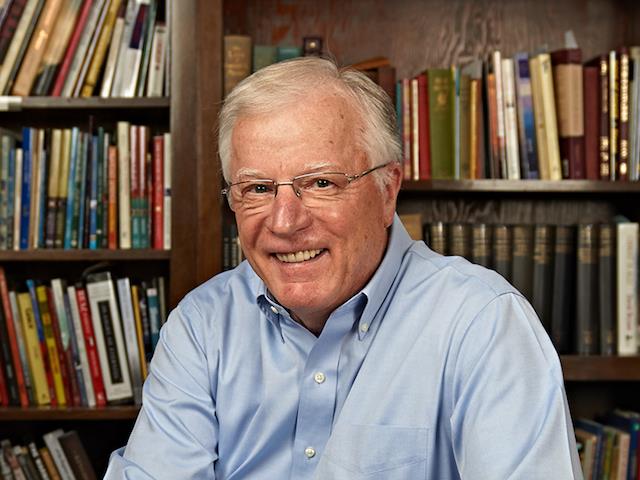
Ancient Rome had executions down to a science, and death was final—until the resurrection of Jesus Christ. Why do Christians believe in the resurrection? In this message, Pastor Lutzer defends the resurrection with three lines of evidence. Let’s discover compelling reasons we can trust the reliability of the resurrection.
Dave MacAlister: Let us run with endurance the race that is set before us. Looking to Jesus, the founder and perfecter of our faith. If there's one thing ancient Rome was good at, it was executions. No one they killed ever lived again, until Jesus made the comeback of all time. When God raised him from the dead, his resurrection guaranteed that those who believe in him will one day rise as well. From the Moody Church in Chicago, this is Running to Win with Dr. Erwin Lutzer, whose clear teaching helps us make it across the finish line.
Dave MacAlister: Pastor Lutzer, critics say Jesus swooned on the cross and never really died. Do we know for certain that his death was genuine?
Dr. Erwin W. Lutzer: You know, Dave, a couple of decades ago, I remember reading a book dedicated to the swoon theory. But since that time, it has been totally debunked. What motivates authors like that is they do not want to believe in a resurrection, in a resurrection from the dead. So they spiritualize much of the history to try to get around the fact that we have a savior who actually died and was raised from the dead. Praise God, no one has been able to keep him in the grave. We're making available for all of our listeners a book entitled Marx and Moody, two contemporaries, two gospels, two tombstones. And by the way, these two greats of history are buried, and they have not been raised from the dead, and one choice. That is to say, the subtitle of the book is Two Contemporaries, Two Gospels, Two Tombstones, and One Choice. For a gift of any amount, it can be yours. Now, at the end of this message, I'm going to be giving you some contact info, so you stand by.
Dr. Erwin W. Lutzer: an atheist by the name of Anthony Flu, who tells this parable to illustrate the difficulty of defending the Christian faith. He says that once upon a time, there were two explorers that were walking through a forest when they came to a clearing in the woods. And they noticed that there were some flowers as well as some weeds in the woods and the clearing, and one of them said, "I believe that there's a gardener that tends this plot." But the skeptic said, "I don't agree. There is no gardener." So they decided to do an experiment, and they patrolled the area. In fact, they put up an electric fence, and then they used bloodhounds to try to find out whether or not a gardener ever showed. As time went by, the electric fence was never tripped, and the bloodhounds never cried out. But the believer kept insisting, "I believe that there is a gardener. It's just that he is an elusive, invisible, intangible gardener." "But," said the skeptic. "How do you distinguish an elusive, intangible, invisible gardener from no gardener at all?" "Now," says Anthony Flu, "that is the dilemma of the Christian faith." We say that there is a gardener that tends this plot with its weeds and with its flowers, with its mixed results, with its good and its evil, but nobody ever sees him. He is invisible, elusive, and intangible. Well, in this morning's message, I want to tell you that I believe that God has entered the garden. There is evidence that there is a gardener, and he has come to the garden. Those of you who attend here regularly know that this is number six in a series entitled Christ Among Other Gods. And in previous messages, I talked about Jesus Christ in contrast to some other religions. Today, we will not be talking about those other religions, we will not have time to do that. I shall speak only about Christ, but when the message is over, I will give you an opportunity to reflect, to ask this question. Is there another religion in all the world that believes in a God like Christ? Take your Bibles and turn to First Corinthians, chapter 15. First Corinthians chapter 15, where the Apostle Paul lays out some evidence for the resurrection and shows its incredible importance. First Corinthians chapter 15, he says in verse 3, "For I deliver to you as of first importance what I also received, that Christ died for our sins according to the scriptures." "And that he was buried, and that he was raised on the third day according to the scriptures, and that he appeared to Cephas, that's to Peter, and to the twelve." "And after he appeared to more than 500 brethren at once." "Most of whom remain until now, but some have fallen asleep, and then he appeared to James and then to all the apostles, and last of all, as it were to one untimely born, he appeared to me also." Verse 16. "For if the dead are not raised, not even Christ has been raised." "And if Christ has not been raised, your faith is worthless. You are still in your sins." "Then those who have fallen asleep in Christ have perished, if only we have hope in Christ in this life, we are of all men most to be pitied." Well, let me ask you the question, what evidence is there that God has come to the garden? What I'd like to do in the next few moments is to give you some evidence for the resurrection of Jesus Christ, three reasons why we believe in the resurrection of Christ. Reason number one is because the documents of the New Testament. The documents of the New Testament are reliable. They are reliable. Let's suppose that we were to look at the documents of the New Testament as any other ancient historical writings, giving them no preferential treatment and not considering them any different than secular writings. How would the New Testament stack up with an evaluation like that? Well, obviously, if compared to secular writings, the New Testament's evidence is overwhelming. There are three tests that scholars use to show the validity or the non-validity of ancient documents. The first, you'll notice, is bibliographical. Bibliographical. That's a pretty big word. I had to pronounce that and practice it a little bit, but its meaning simply, do we have a good reliable text that is trustworthy? You see, the ancient documents do not exist. The original manuscripts upon which the Apostle Paul and Matthew, Mark, and Luke wrote, we don't know where they are, because manuscripts don't last forever, they disintegrate, and there are no ancient original manuscripts that come from that era in any kind of writing. To give you an idea about the gap that exists between the originals and the ones that we do have. If you were to study the writings of Plato, there is 1500 years before the time of Plato, or I should say, between the time of Plato and the actual documents that we have. Those of you who have studied philosophy, when you read about Plato and Aristotle and all of their teachings, the manuscripts upon which those texts are based, only date back to about the year 1000 AD. The gap is about 1500 years. And yet, everybody knows that we have a rather reliable text as to what Plato or Aristotle or Euripides wrote. In the case of the New Testament, the gap is about 250 years. And even that gap has been narrowed because of the discovery of some recent manuscripts, Papyrus manuscripts in Egypt. We have the quotations of the early church fathers. And this has led a man by the name of Sir Frederick Kenyon, who for many years was the principal librarian in London, England, at the museum there, to say that the gap between the original writings and the manuscripts that we have today is for all practical purposes negligible. We have a good textual tradition upon which we can base our faith. Secondly, there is what is known as internal evidence. That has to do with the reading of the text itself. Do the writers disqualify themselves because of contradiction? Does it appear as if they are making up the story? Well, if you read the New Testament documents, it's clear that the writers claim to be eyewitness accounts. For example, John says regarding the crucifixion, it says, "He who saw this bare witness of it, and he is the author of what he actually saw." We won't take out time to read the text, but in Luke chapter 1 verse 4, Luke says that he has decided to set forth the things that happened in the life of Christ, and he says, "I have laid it out in order that we might know exactly what has taken place." You read the Gospel writers and they have a sense of authenticity and integrity. You don't get the impression at all that they are unreliable news reporters. Then there is also external evidence. External evidence asks the question, is there anything in ancient history or archeology that confirms the New Testament witness to Christ? Well, you know, in various writings, there are 13 references to Christ in secular literature, in fact, Josephus even has a reference to Christ's resurrection. In addition to that, you have archeology which always points in the direction of the authenticity of the Gospels. A man by the name of Sir William Ramsey spent all of his life studying the Gospel of Luke and then the other book that Luke wrote, which is the book of Acts, and he concluded that Luke, he says, is unsurpassed. He says, in his trustworthiness as an historian. Everywhere we look, there seems to be the earmarks of reliability. So, one of the reasons that we can believe as Christians in the authenticity of the manuscripts, the reliability of the manuscripts is that even if they are tested by secular means and secular tests, they come out very well as being reliable documents. Then, secondly. You'll notice, first of all, the New Testament documents are reliable, secondly, the witnesses are credible, they're credible witnesses. Now, let me speak with you very frankly, because if you do any witnessing at all and you're talking to people about your faith. You know that often they will say, "Well, aren't you sure? How do you know that the Gospel stories weren't made up by those who were devoted to Christ?" I remember many years ago reading a Sunday school manual from a very liberal denomination. I won't tell you what denomination it was, but it was very liberal. Here's what it says. It says, "When it came to the miracles of Jesus, like taking five loaves and two fish and feeding a multitude, what really happened was there was a little boy with his lunch, and he took his lunch and he gave it to Jesus, and when the multitude saw the devotion of this little boy, and saw his commitment, they all felt so guilty that all of them began to take out their lunches, and they began to share with those who didn't have a lunch, and that's how everybody was fed." It was known as the paper bag theory. Everybody had a little paper bag, and when the little boy gave his paper bag to Jesus, thousands of little paper bags appeared. Now, you know, if you have a little paper bag God, you need a theory like that. But here's the question. How do we know that these disciples didn't take a man and make him into God? How do we know that they did not put words in his mouth, and took an ordinary person, Jesus, and make him into the Christ? There are several reasons why the disciples were incapable of doing it. First of all, because Jesus would have been a very bad candidate to choose to make into the Christ. If there is anything unlike his times, it was Christ. There were all kinds of Messiahs that would have fit in better with what the people were expecting in that day. Those who have done extensive work to look into what the general thought was regarding the Messiah in Christ's time, tell us that the nation was expecting a Messiah that would unify the ten tribes. They were expecting a Messiah who was going to take on Rome and fight the Roman Empire and throw off that heavy yoke of Roman occupation. They were certainly not expecting a Messiah who said, "My kingdom is not of this world." They were not expecting a Messiah who was going to take everything that was going on in the temple, all of the forgiveness and the worship that was taking place there, and offering it out on the street corner and saying, "Well, you need to do is come to me to be forgiven, you don't have to go into the temple." That's not the kind of a Messiah that they were expecting. Jesus would have been the last person that people would have made into the Messiah. There's another reason. Do you realize that the disciples would never have been psychologically capable of taking a man and calling him God? They would not have been able to do that. They were schooled in, steeped in Judaism, which says, "Thou shalt have no other gods before me. The Lord our God is one Lord." And now you mean to tell me that these disciples would have taken an ordinary man and ascribed to him deity? That would have been the highest blasphemy. They could not have done it. The reason that the disciples finally concluded that Jesus Christ was God is not because of Messianic fever, which some of the liberals want to say existed in those days and they were anxious to make a man into a God. Not because of that. They were hard-headed fishermen who refused to believe until the evidence was so overwhelming that the facts compelled them to believe. That's why they believed that Christ was the Messiah, that Christ was God. And then, of course, it is the resurrection of Jesus Christ that actually transformed them. I mean, they were a very frightened group of men on the day of the crucifixion. But it was because Jesus Christ was raised from the dead that it is that explanation that can explain the strength of those early disciples and the formation of what we know as the Christian church. The documents are reliable. The eyewitnesses are credible. Thirdly, the alternatives are unbelievable. They're unbelievable. Now, of course, because unbelief reigns in the human heart, there have been people who have looked at the Bible and said, "Well, the tomb must have been empty." Or many who grant that, but they say, "The explanation for the empty tomb must be found somewhere else other than in a miracle." And so, some people have said, "Well, the disciples stole the body." Remember, that's what Pilate was worried about when he said, "You know, so that the disciples don't come and steal his body, set a watch." And they guarded the tomb. But I need to ask you something. If the disciples stole the body, they would not have laid down their lives for something they knew to be a hoax. People have laid down their lives for foolish causes, but not for things that they believed were foolish causes. Others have said, "Well, the enemies must have stolen the body." But if the enemies did it, they would have produced the body when on the day of Pentecost, Peter stood up and preached with such conviction about the resurrection of Jesus Christ. You see, it just doesn't work to say that the enemies stole it. And then, of course, a book came out many years ago, which I remember reading, if you're into fiction, it's a good book to read. And it illuminates the swoon theory. The idea is that Jesus really didn't die on the cross, he just swooned and then he was put into that dark, cool tomb, and he was revived. And then he came staggering out on the third day with bloodstains all over his body, and in a weakened condition, he inspired the disciples to begin the Christian church, and he convinced them of his resurrection. Well, that is also unlikely. All theories regarding the empty tomb collapse under the weight of other evidence. Throughout history, not everybody has been happy with the resurrection and the deity of Jesus Christ. I can assure you of that. Not everybody has been glad because of it, right from the early centuries, Pilate said, "Let's put an end to this." And the Pharisees wanted to put an end to it. And when you think of Western civilization, some of our greatest thinkers who have impacted us the most, are people who, in effect, have said to themselves, "We want to keep Christ in that tomb." And in most instances, they've tried to keep him there by simply ignoring him, pretending that he had no relevance to their particular disciplines or their expertise. For example, David Hume took the stone cold philosophy and said to himself, "We can use philosophy to keep that tomb closed." So, Hume taught that miracles were impossible. He said, "The reason that miracles are impossible is because there is uniform evidence against them." Now, if you've taken an introductory course in logic, you know that that is circular reasoning. He's beginning with the supposition that he wishes to prove. How can he know that there is uniform evidence against miracles? All that we can do is check them out and see whether they have happened. Now, what is a philosopher? Word philosophy means a lover of wisdom. How could David Hume, who supposedly loved wisdom, have bypassed Jesus Christ about whom the Bible says that in him are all the treasures of wisdom and knowledge? How could Hume have done that? Well, he tried to keep the tomb closed.
Dave MacAlister: Well, this is Pastor Lutzer, and I have to say this, that Karl Marx also tried to keep that tomb closed. Karl Marx believed that he was a philosopher. He said that he was going to begin a revolution as a philosopher. Lover of wisdom? I don't think so. He did away with God. He wanted to abolish the family, abolish all objective truth. And there he is, having a great impact still in society today, a very negative impact. Contrast that with Dwight L. Moody. Both of them saw the same dilemma that the world was very broken, but they had two very different solutions. Now, Moody was very interested in helping the broken and the downtrodden. He began orphanages and ministries, but Marx had a very different solution. For a gift of any amount, we're making a book available for you this month entitled Marx and Moody, two contemporaries, two gospels, two tombstones, because we talk about their legacies and one choice. Hope that you have a pen or pencil handy right now. Go to rtwoffer.com. That's rtwoffer.com or call us at 1-888-218-9337. Let me give you that contact info again. Go to rtwoffer.com. rtwoffer.com or call us at 1-888-218-9337.
Dave MacAlister: It's time now for another chance for you to ask Pastor Lutzer, a question you may have about the Bible or about the Christian life. Many Christians are alarmed at the way the public school system has veered off track from just teaching the fundamentals and increasingly, is promoting an agenda that no believer can endorse. Bob is one of our listeners. He wants to know this, Pastor Lutzer. Do you recommend homeschooling over public education?
Dr. Erwin W. Lutzer: Well, I'm asked that frequently, and I need to say that if parents have a choice, of course, homeschooling would be best. Because it is true that the curriculum in many schools is one that Christian parents cannot possibly accept. We have the teaching of homosexuality, we have sex education that oftentimes inflames the desires of young people. How can our children withstand this? They're not in a position to be able to stand by themselves. They are, after all, just children. You know, when you plant new grass and it's very young, you don't walk on it. You take good care of it. Now, once it's stronger, then you can walk across the lawn. In the very same way, hopefully children grow up, and they are convinced that they can then defend the faith in college and university, but in the earlier grades, it's quite different. At the same time, however, I am not saying that all parents should pull their children out of the public school system. I believe that there are still some public school systems in America that are accommodating to Christian values. They may not be distinctively Christian, but there are many teachers out there who are not going to work against you as parents. So, bottom line, Bob, what you need to do is to make up your own mind. What is the possibility of having your children homeschooled? Is that even feasible over against the kind of school that they would attend if they were in public education? I do not think it is a one size fits all, but let every Christian pray it through on their own, seeking all the possibilities and making as wise a decision as possible for their children.
Dave MacAlister: Some wise counsel on a matter of deep concern for more and more parents these days. Thank you, Dr. Lutzer. If you'd like to hear your question answered, you can go to our website at rtwoffer.com and click there on Ask Pastor Lutzer. Or, you can call us at 1-888-218-9337. That's 1-888-218-9337. You can write to us at Running to Win, 1635 North LaSalle Boulevard, Chicago, Illinois 60614. There's massive evidence that says Jesus was raised from the dead. Though naysayers come and go, Christ's resurrection is as certain as any event in history. Next time on Running to Win, Pastor Lutzer talks further about Christ's extraordinary resurrection and how far some will go to explain away his miracles. Thanks for listening. For Pastor Erwin Lutzer, this is Dave MacAlister. Running to Win is sponsored by the Moody Church.
Related Episodes
An Extraordinary Ascension – Part 1 of 2
Friday, September 18
An Extraordinary Resurrection – Part 2 of 2
Thursday, September 17
An Extraordinary Death – Part 2 of 2
Tuesday, September 15
Related Videos

About Running To Win
Running the race of life is hard. But with the Bible front and center and a heart to encourage, Pastor Erwin Lutzer presents clear Bible teaching, helping you make it across the finish line. Since 2011, this 25-minute program has provided a Godward focus and features listeners’ questions.
About Dr. Erwin W. Lutzer
Dr. Erwin W. Lutzer is Pastor Emeritus of The Moody Church where he served as the Senior Pastor for 36 years (1980-2016). He earned a B.Th. from Winnipeg Bible College, a Th.M. from Dallas Theological Seminary, a M.A. in Philosophy from Loyola University, and an honorary LL.D. from the Simon Greenleaf School of Law (Now Trinity Law School).
A clear expositor of the Bible, he is the featured speaker on two radio programs: Running to Win—a daily Bible-teaching broadcast and Songs in the Night—an evening program that’s been airing since 1943. Running To Win broadcasts on a thousand outlets in the U.S. and across more than fifty countries in seven languages. His speaking engagements include Bible conferences and seminars, both domestically and internationally, including Russia, the Republic of Belarus, Germany, Scotland, Guatemala, and Japan. He has led tours to Israel and to the cities of the Protestant Reformation in Europe.
Pastor Lutzer is also a prolific author of over seventy books, including the bestselling We Will Not Be Silenced, One Minute After You Die, and the Gold Medallion Award winner, Hitler’s Cross. Pastor Lutzer and Rebecca live in the Chicago area and have three grown children and eight grandchildren. Connect with Pastor Lutzer on X (@ErwinLutzer) or moodymedia.org.
Contact Running To Win with Dr. Erwin W. Lutzer
Mailing Address
Moody Church Media
1635 North LaSalle
Chicago, IL 60614
Toll-free Phone Number
1.800.215.5001
Monday – Friday
8:00am – 5:00pm CST
Fax Number
1.312.642.4904


