The God Who Refreshes - Part 2
Ministries > Unlimited Grace with Bryan Chapell
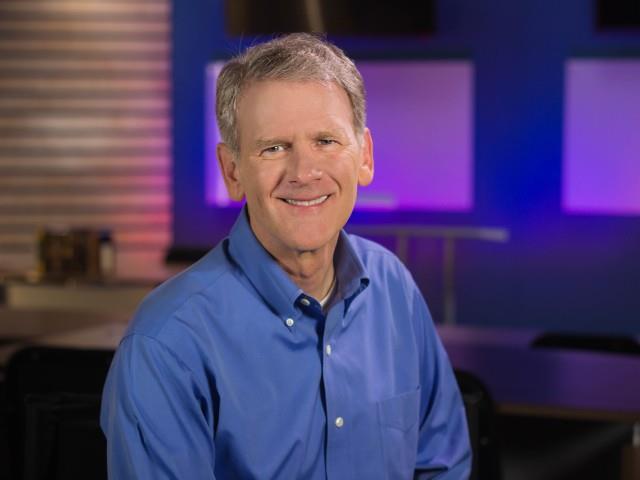
Pastor Bryan shares the second half of a lesson from Psalm 84. Dr. Chapell investigates the ways that God provides restoration, even as our souls cry out to the Lord in despair.
Bryan Chapell: If the grace of God is great enough to cover a mass murderer, if it's great enough to soften the hearts of people who've experienced life's greatest hurts and they still have hope, and they still believe in a God of eternity, and they believe that He is working past the immediate hurt in a real world for an eternal good, I need that sun and shield. And so do you, too.
Guest (Male): So glad you joined us for today's Unlimited Grace, the audio broadcast ministry of pastor and author Bryan Chapell. In today's episode, Pastor Bryan shares the second half of a lesson from Psalm 84. Dr. Chapell investigates the ways that God provides restoration, even as our souls cry out to the Lord in despair. You can find this lesson and many others when you visit unlimitedgrace.com. And while you're there, look for Pastor Bryan's book, The Promises of Grace. Dr. Chapell offers a careful look at the beauty of grace and all it brings to believers. These blessings come with the understanding that because we cannot hang on to God, He hangs on to us. Let's hear now from Dr. Bryan Chapell as he shares the second half of the lesson, The God Who Refreshes.
Bryan Chapell: As you get to Psalm 84 in your Bibles, you'll see that it is composed by the sons of Korah, which is unusual for us to hear the sons of Korah. Those were the ones who arranged the worship for other people. So those of you making all the arrangements, I don't know if they were table leaders among the sons of Korah, but they were those who did all kinds of chores to enable others to worship. Let's stand and see what they have to say to us about the worship of God in Psalm 84. The Psalm begins: "How lovely is Your dwelling place, O Lord of Hosts! My soul longs, yes, faints for the courts of the Lord. My heart and flesh sing for joy to the living God. Even the sparrow finds a home and the swallow a nest for herself, where she may lay her young at Your altars, O Lord of Hosts, my king and my God. Blessed are those who dwell in Your house, ever singing Your praise. Selah." Which is again that musical notation that's like an amen planted right in the middle of the psalm. "Blessed are those whose strength is in You, whose heart are the highways to Zion. As they go through the Valley of Baca, they make it a place of springs. The early rain also covers it with pools. They go from strength to strength. Each one appears before God in Zion. O Lord God of Hosts, hear my prayer. Give ear, O God of Jacob. Selah. Behold our shield, O God. Look on the face of Your anointed. For a day in Your courts is better than a thousand elsewhere. I would rather be a doorkeeper in the house of my God than dwell in the tents of wickedness. For the Lord God is a sun and shield. The Lord bestows favor and honor. No good thing does He withhold from those who walk uprightly. O Lord of Hosts, blessed is the one who trusts in You." This past week, I spent some time with Pastor Deveraux Hubbard, who's the pastor of Saint Paul's Baptist Church. And some of you will know, lost his oldest son a couple of years ago. And as I was traveling with Deveraux, he talked about the struggles that he and his family have gone through, what it is like to be facing such brokenness of heart and family. And one of the ways that their family has responded is that Deveraux has written music to be sung in different churches to help people understand how faith helps you face trauma. But the words are hard, I mean, really hard in the things that he has written. I asked him if I could relate these to you. He said, "Yes." He first in one of the songs quotes the words of Job: "Have you ever wanted to curse God and die?" And then he answers the question: "I have. Have you ever wanted to curse God and die? I have." Why make so much about being broken? Because as any of us looks through a mature life, we recognize that until that scoring of our life has occurred, where something has happened to prepare us to look to God in faith beyond our own resources, we could not have maintained what God called us to ultimately do. Listen, I'm a preacher. I preach about such things, and I recognize even I have played those games in my mind. And I've said, you know, if I lost this person or if I lost that position or if I lost that reputation, would I still have faith? And I always say, "Yes." But as I look back over the really tough things in my life, they were not the things that I anticipated. They were not the things that I could have handled in my own planning and apprehension of my strength. Ultimately, the things that I needed to learn that the Lord taught me, that the Lord helped me with, were the things that I could not handle on my own, where my flesh and my heart had to cry out to the living God. God, I can't fix this. I don't know how to take this. I don't know how to prepare for this. I desperately need You. And in that reality, there is the formation of faith at that unique break that actually strengthens us, not just for the moment, but for the eternity that we and our families and our friends and coworkers actually need us to understand. Not what we can handle in our strength, not what we can handle in our own understanding, but that which says, "I now recognize my great weakness. I now recognize my great hurt. I recognize that apart from Christ, I can do nothing. I can't take another step without Him now." And in that reality of that brokenness, I begin to understand why the pilgrims need to understand as they go to worship God. You go through a Valley of Weeping, but this is strength unto strength because God is always playing the end game. He's not just thinking about today. He's thinking about eternity, and not just for you, but for everyone who witnesses your life and is touched by it. It's that eternal purpose, that eternal faithfulness that He is experiencing and showing to you so that you would trust Him beyond your strength, beyond your doing, beyond this moment, beyond these circumstances for the eternal realities that are the ultimate plan of an eternal God, who made the stars and cares about the sparrows and knows your soul. And that God is the one that the psalmist is speaking about. I need Him, and you do as well. And so that we will understand, we don't just hear about sparrows and pilgrims, but ultimately about doorkeepers. Doesn't that seem strange? But it comes out of such a good place. After this desperation of people going through the Valley of Baca, you recognize why verse 8 is here: "O Lord God of Hosts, hear my prayer. Give ear, O God of Jacob." God, I just need You to hear me now. And as people begin to cry out, what do they ultimately do if they are the pilgrims now arriving at the temple of God, bringing their petitions? Verse 9: "Behold our shield, O God. Look on the face of Your anointed." Now, the words are strange to us, but think how special they are. God, hear my prayer. But look on the face of Your anointed. Now, for an Israelite at the time of the writing of this psalm, probably just thinking: "Hear the people of Israel, Your anointed." But you and I should recognize that that word "anointed" gets translated in the New Testament as the word "Christ," the Messiah. Lord, look on His face. And I begin to recognize that what God promised me in the New Testament, what He promises me by the work of Jesus Christ, is that I have an intercessor at the right hand of God in my behalf. And when I go before God and say, "I'm broken by my circumstances or by my own sin, Lord, hear my prayer. Don't look at me, though. You look at Him. Look at my shield. Look at the one who stands in my place. Look at His face." Because that is the Christ in my behalf, the one who right now at the right hand of God intercedes for you. So that when you go before God and in your brokenness you say, "God, it's me who caused the trashiness. It's the mud in my life. It's the difficulty that I didn't respond well to. But hear my prayer. But not because of me. I hide myself behind Jesus and look to Him as You hear my cry." And then amazing things begin to happen. Verse 10: "For a day in Your courts is better than a thousand elsewhere. I would rather be a doorkeeper in the house of my God than dwell in the tents of wickedness." Now, we just love the words because they come from the songs of our youth, many of us, right? "I'd rather be a doorkeeper in the house of the Lord. Better is one day in Your house than a thousand elsewhere." But you have to see the context. I mentioned to you right at the outset of this message that this is a psalm of the sons of Korah. The Levites, who were in charge of temple worship, were divided into clans. The sons of Aaron offered the sacrifices. The sons of Asaph, the music. And the sons of Korah, they were the doorkeepers. Now, when you think doorkeeper, don't think of the guard at Buckingham Palace that stands still and doesn't move, okay? What would a doorkeeper be when there are people from all nations, by Jesus' time, different languages, coming to Jerusalem by the hundreds of thousands to go into the temple to worship and offer their sacrifices? I mean, you just don't say, "Listen, get in line, get three back." No, I've got thousands and thousands of people organized, and there are the doorkeepers, the Korahites, that are organizing what God is doing so that all these people can worship as God intends. This is a heavy, intense responsibility. Instead of thinking of the impassive soldier, think of the Sergeant-at-Arms in the United States Senate who ushers the President in for the State of the Union address. Oh, that's a pretty good seat, to see the President come in to do his work. And if you begin to see it that way, the doorkeeper, while it's not the position of greatest prestige, it often gives you a front-row seat. It's like being an usher at the World Series, right? I get to see what God is doing. And here's what's happened. There have been all these pilgrims coming from different parts of Israel, coming from different nations ultimately, coming from different languages, and they're coming in to the place of worship to offer their petition to God after the weeping, after the journey, after the struggle. And they're saying, "God, hear me." And now, wouldn't you love to be a bug on the wall? Wouldn't you like to have the best seat in the house, to see God begin to work? Like those of you who are table leaders for Vacation Bible School, or song leaders, or cookie servers. I mean, just to be there and see God take kids out of the neighborhoods, out of different families, some churched, some unchurched, some de-churched, and begin to do the work of salvation and eternity among them. And you begin to say, "Oh, I'd rather be here than a lot of other places. I love to see the hand and the work of God in this place." And that is what we see the doorkeepers doing. It's what we rejoice in as the people of God when we begin to see those of different nationalities, ethnicities, and languages come into our own church. And we begin to say, "Whoa, I want a front-row seat for this. I want to be able to see what God is doing in this place. This is great. My heart and my flesh cry out for the living God. God, do Your work. I want to see it." And that reality is what begins to fill people with joy. So that they would say in verse 11: "For the Lord God is a sun and shield." Think spring tomatoes, everybody, okay? What does a spring tomato need? It needs sun to be nourished. It also needs some shield from maybe the cooler temperatures early on, right? You need both. You need nourishment and protection, and that's what's being called upon here. God, I recognize if You have brought these different people here, if You are working through these people for prayers for eternal things, then You are the sun and the shield not only to them, but that I need. So that verse 12: "O Lord of Hosts, blessed is the one who trusts in You." If I can really begin to see God at work, begin to recognize it's real enough for the real world, then even when I go through my Valley of Baca, through the weeping and the trial and the disease and the distant relationships and my own sinful embarrassment, then I will trust that God is still by His son, my sun and shield. Nurturing me with the Spirit of God in my life with what I need to move forward, but a shield from the circumstances or even my own actions that would deny me eternity. That what God is promising is: "I will maintain the end game." The end is secure because God is a sun and shield through the work of His son, and when I trust that, it actually is what gives me the reason to sing in the hard circumstances. So that we would actually say: "My heart and flesh cry out to sing to the Lord of Hosts. I may not be able to understand this, but I trust Him because He is my sun and He is my shield, nourishing what I need, protecting from what I cannot be protected from myself. He is my sun and shield, and so I trust Him." Not always easy, but necessary for people of faith. We're approaching the anniversary of the mass shooting at Mother Emanuel in Charleston, South Carolina. Do you remember? Young man, 21 years old, Dylann Roof, came into a midweek Bible study, went down to the basement of a church, began to participate in the Bible study for an hour or more before taking out a .45 caliber and shooting 14 people, killing nine. Because of the laws of South Carolina, the families of those killed were allowed to show up for the bond hearing of Dylann Roof. Can you put yourself back in that situation? This nation was about to explode with racial violence that summer. City after city had experienced things where the streets were enraged. And with that mass shooting across racial lines, people expected more explosions. I want you to remember what the people of the church did at the bond hearing. Families with voices trembling with emotion and anger, nonetheless spoke of the grace of forgiveness for a nation looking on. Nadine Collier, because Collier is the name of my grandmother, it caught my ear, Nadine Collier, who lost her mother, spoke directly to the murderer: "I forgive you. You took something very precious away from me. I will never get to talk to my mother again, but I forgive you. And I have mercy on your soul. You hurt me. You hurt a lot of people, but if God forgives you, I forgive you." Amazing. Even as that man will experience the incarceration he deserves, there are people who said, "For the sake of the gospel, we want the message of salvation to be known." And all of us through the TV cameras who were on that hearing and on the church service the following week became the doorkeepers in the house of the Lord, looking on at the amazing thing that God was doing as the message of the grace of the gospel just exploded across a nation in such a way that was more powerful than people could actually believe. Could they really mean that? Could the gospel really mean that? That those who are so, in the eyes of the culture, trashy and filthy and awful to have done this thing, could experience the grace of God? And the families who'd experienced such hurt would still talk about the grace of God? I must say there are any number of us who would say, "If that's what it means for God to be a sun and a shield, I need that." Who does need it? We do. If the grace of God is great enough to cover a mass murderer, if it's great enough to soften the hearts of people who've experienced life's greatest hurts and they still have hope, and they still believe in a God of eternity, and they believe that He is working past the immediate hurt in a real world for an eternal good, I need that sun and shield. And so do you, too. And how do I possibly believe in it? I believe in a God of eternal things because He sent His son to make it true. He experienced the murder that was caused by my sin and yours. He was the one that went through the hurt in my behalf and your behalf, so that the grace that God intends would flood into our lives, not just for the moment, but for eternity. And the God who is concerned for that end game, for that eternal purpose, is working not just in the vast but in the sparrows. His eye is on the sparrow, so I know He cares for me and you. That's why He sent Jesus for the eternal things. His eye is on the sparrow, and I know He cares for you.
Guest (Male): That's Pastor Bryan Chapell, and you've been listening to Unlimited Grace. If you've been blessed by this message and would like to hear more from Dr. Chapell, I would encourage you to visit unlimitedgrace.com. In addition to messages from Pastor Bryan, you can explore the many sermons, podcasts, seminars, and more available to you. Also, be sure to request a copy of the book from Dr. Bryan Chapell called The Promises of Grace. We'll send you a copy right away as our way of saying thank you for your most generous financial support. Once again, go to unlimitedgrace.com or you can give by calling 844-41-GRACE. That's 844-414-7223. Please be sure to join us next time as once again we endeavor to put Christ at the center of our efforts so that lives might be transformed by His unlimited grace. This ministry is brought to you by Unlimited Grace Media and continues to be made possible with your generous financial support.
Related Episodes
The God Who Refreshes - Part 1
Thursday, July 16
The God Who Answers
Wednesday, July 15
The God Who Leads - Part 2
Tuesday, July 14
About Unlimited Grace
Unlimited Grace is dedicated to spreading the gospel of God’s grace to all people. We desire for believers everywhere to serve God through faith in His grace that frees from sin and fuels the joy of transformed lives.About Bryan Chapell
Bryan Chapell, Ph.D. is the Stated Clerk Pro Tempore of the Presbyterian Church in America (PCA), based in Lawrenceville, GA.
Dr. Chapell is an internationally renowned preacher, teacher, and speaker, and the author of many books, including Each for the Other, Holiness by Grace, Praying Backwards, The Gospel According to Daniel, The Hardest Sermons You’ll Ever Have to Preach, and Christ-Centered Preaching, a preaching textbook now in multiple editions and many languages that has established him as one of this generation’s foremost teachers of homiletics.
Dr. Chapell is passionate about sharing the truth of God's grace with others, because it provides the freedom and fuel for transformed lives of joy and peace.
He and his wife, Kathy, have four adult children, a growing number of grandchildren, and lives rich with friends, fishing and faith.
Contact Unlimited Grace with Bryan Chapell


