Speaker Series Highlights on Current Events and Issues of the Faith
Ministries > The Christian Worldview with David Wheaton
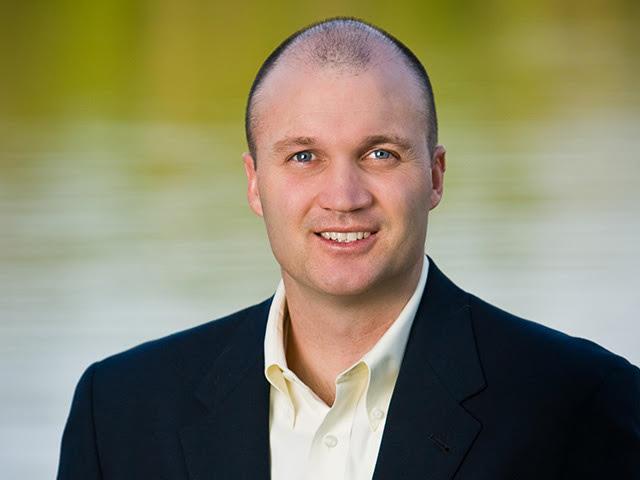
Guest: Pastor Travis Allen, Grace Church (Greeley, CO)
It was a beautiful fall evening at Stone House Farm in Jordan, MN for our recent Speaker Series event featuring Travis Allen, pastor of Grace Church in Greeley, CO and former Managing Director of Grace to You and member of the U.S. Navy Seal teams.
135 attendees gathered at the farm for a time of fellowship and dinner on the lawn beside the stone farmhouse, followed by dessert and coffee. Then, as the sun made its downward arc over the rural landscape, we all gathered outside the North Barn for an interview with Travis about current events and issues of the faith. It was a blessed time.
We weren’t able to fit the entire interview with Travis into today’s program but you will hear most of it. So let’s get out to Stone House Farm for this interview with Travis Allen at our recent Speaker Series event.
David Wheaton: Speaker Series Highlights on Current Events and Issues of the Faith. That is the topic we'll discuss today on The Christian Worldview Radio program, where the mission is to sharpen the biblical worldview of Christians and to proclaim the good news of Jesus Christ. I'm David Wheaton, the host, and our website is thechristianworldview.org. It was a beautiful fall evening at Stonehouse Farm in Jordan, Minnesota, for our recent Speaker Series event, featuring Travis Allen, pastor of Grace Church in Greeley, Colorado, and former managing director of Grace to You, and member of the US Navy SEAL teams. 135 attendees gathered at the farm for a time of fellowship and dinner on the lawn beside the Stone Farmhouse, followed by dessert and coffee. Then, as the sun made its downward arc over the rural landscape, we all gathered outside the North Barn for an interview with Travis about current events and issues of the faith. It was a blessed time. We weren't able to fit the entire interview with Travis into today's program, but you will hear most of it. So let's get straight to the interview with Travis Allen at our recent Speaker Series event.
David Wheaton: Welcome to The Christian Worldview Radio program. Thank you for being here tonight. We are coming to you from Stonehouse Farm in Jordan, Minnesota, the site of the Overcomer course for young adults, which is held right in this building. We've had wonderful times. And thank you all for coming. Pastor Travis Allen, we are so grateful that you are with us here in Minnesota. Someone was saying during dinner that it was way back in 2016, 10 years ago already.
Guest (Male): Hard to believe, huh?
David Wheaton: That you were the first inaugural featured speaker at The Christian Worldview Conference. For those of you who don't know Travis, I thought the first thing I could ask you is a question I often ask first-time guests in the program, is just tell us briefly about your background, how God brought you to saving faith, and who have been some of the key influences in your life.
Guest (Male): First of all, thank you everyone for coming out. This is really a well-attended event and really grateful to meet some new friends. Thank you, David and Brody, for inviting us. It's a joy to have your friendship. This has been a real sweet benediction and gift from the Lord to know you and Brody and your family and to be invited into your family as well here on The Christian Worldview. I also really appreciate how you do ask, usually it's first-time guests, but sometimes if they haven't been on for a while, you'll ask them to share the gospel or to share about their own experience with the gospel. I really appreciate that you do that. Because we don't want to make those assumptions that somebody knows the gospel just because they're being invited onto a program. So it's really great that you do that, gives a lot of people another way to share the gospel by hearing it over and over.
Guest (Male): I was raised in a Christian home and very faithful Christian parents, conservative evangelical Christian family, very dear parents, very faithful, but I was not a believer. I was not a Christian. And I knew that when I was kind of a young guy in like fifth grade that I didn't believe. But I went through, you know, went to all the church events and went to camps and went through all the scripture memorization, kind of like Awan, we had a group called Boys Brigade and Christian Service Brigade, went through all those things and uh and learned a lot of Bible. Because I was kind of forced to, but just it was not in my heart. I was not regenerate, wasn't converted.
Guest (Male): If you don't worship God, if you don't worship God in Christ, you're going to find something else to worship. And so the form of idolatry that appealed to me as a young guy was the military. And I set my sights on a special forces type of an avenue. I learned about the Navy SEALs, that they worked in the environments of sea, air and land, and they worked all over the world. And I thought, that's for me. I heard it was the hardest training in the world, and so that's where I wanted to go. So I set a course toward that kind of an idolatry and that kind of a life. I wanted to live in the special forces environment and do all the things I could do in the SEAL teams, and then maybe go on to officer training and maybe do that for a career, maybe go into the CIA, disappear into some type of a black ops world or something like that.
Guest (Male): The Lord had other plans. After I went through what's called BUDS, it's an acronym, Basic Underwater Demolition/SEAL training. After I did that, I was in Airborne School in Fort Benning, Georgia. And that's where the Lord sent his spirit to start convicting me of sin and righteousness and judgment. And so that happened in August of 1989. I was convicted of sin that I'd been committing, you know, all through my years growing up, but the Lord opened my eyes to my wretchedness before him. And I think the thing that was deeply affected me was just the sin of pride. Something that I knew internally, how I thought about myself and how I portrayed myself, my own mental image, started to really appall me and make me feel ashamed before God.
Guest (Male): That was not the moment of my salvation. I went back to the scripture, affirmed the gospel that I was raised in, that I did believe the facts of the gospel. I went back to church, started going to church whenever we were in town, not training. But it took about eight or nine months of struggle with the issue of the Lordship of Christ. This is right around the time of the Lordship controversy that John MacArthur wrote the book, The Gospel According to Jesus, that came out a little bit later, I think. Or no, just a little bit earlier, but I didn't know anything about that. I just knew instinctively that if Christ was going to save me from my sin, he also had a claim of Lordship over my life and that I needed to obey him. And I was really concerned because I knew obedience could mean that he would take away what I really wanted to do with the rest of my life. And so there was a wrestling there of the Lordship of the idolatry that I'd set my heart on, which was in special forces. And then the Lordship of Christ. And so it was in the spring of 1990 that I eventually repented and put my faith in Christ and I was so grateful. Saying, "Lord, take away all of this. I don't care. I want forgiven sin. I want a right relationship with you. I want to know you, I want to know God." And clearly that was regeneration. That was me getting a new nature from God by his grace and then by that new nature, now seeing Christ for who he really is and God for who he really is.
Guest (Male): So, that's what changed completely in me. It was spring of 1990, August of 1990, coincident with Saddam Hussein invaded Kuwait and our platoon then was fast-tracked to be sent over to the Gulf in support of Desert Shield and Desert Storm. So we were sent over to the First Gulf War. That was probably the Lord's plan for me. I like to say he had Saddam invade Kuwait so that I could be sent out of the states and get into my Bible. So, but the Lord was discipling me in his word. And he deeply embedded the word in my life. I read through the Bible for the first time. Studied the book of Romans and then Ephesians and then Acts, verse by verse. That deployment lasted from August 1990 through May of 1991. I came back a very changed person. I realized that he had set a doctrinal foundation in me that I really was God-centered in my thinking because of those books of the Bible that I'd studied. Word-driven, Calvinistic in my thinking. I didn't even know what Calvinism and the Arminian debate was, but I was certainly Calvinistic.
Guest (Male): I had an institutional foundation, believing in the family, the church, the local church was the context of the life that I wanted to live and knew that I should live. And I wanted to live out my Christian faith in the workplace and everything that I did. And I also had what I would call like an experimental foundation or experiential foundation where I really wanted an abiding daily relationship with God. I realized that the gift of salvation is God himself. I relished the fact that I could know the living God. And I could be on the far ends of the earth and still know him personally through his word, through prayer, and so I really relished in a in a deep abiding experimental relationship with the Lord.
David Wheaton: Yeah. Thank you for sharing the story, Travis, because I think one of the really good and natural way to share the gospel with someone is through your own salvation story. And I just think it's interesting that that occurred when you're in the Navy SEALs. This is a really rough and tumble environment. You could say there's probably not a lot of sanctified other guys in that force, although I know there was one. And maybe you could just briefly tell us why that was so important to have one other believer in one of your SEAL teams.
Guest (Male): It is very true and it's not just special forces, but it's military in general. There's just not a lot of Christian influence. And even when you do get a chaplain, these days chaplain can mean a lot of different things. You can have a Wiccan chaplain or a Roman Catholic. So there's not a lot of really good strong true Christian influences. The Lord was gracious in giving me a friend that we had been through BUDS together when we were stationed at SEAL Team 8, we lived in the same house together until we were kind of getting settled. He was not in my platoon to start with, but just before we deployed, we had a guy that we had to get rid of out of our platoon, and this guy named Roy Lopez was dropped right into our platoon. He was a dear believer, and the two of us used to study the word of God together. So we read through the Bible, but then we studied Romans and Ephesians and Acts and just did study together. We really came back from that deployment very different men. He's still walking with the Lord today. We're still in contact and uh dear, dear friend.
David Wheaton: Okay, so before we jump into some current events and issues of the faith, I did want to ask you about John MacArthur. It's been one year since he went to heaven. And you went to the seminary which he presided over, the Master's Seminary. You worked for him as the managing director of Grace to You. Just tell us in what ways that John MacArthur influenced you, let's say personally and then also as a pastor as well.
Guest (Male): It would be impossible to overstate his influence in my life and in my family. Very dear to me, even from a distance. When I got back from that deployment in May of '91, I was driving back and forth into the SEAL team from where I lived. And was listening to Christian radio. There are a lot of very good and gifted preachers on the radio. And one voice stood out, cut through all the other voices, and it was John MacArthur's. I just remember being elated, almost intoxicated with the truth. Because I was learning what the Bible meant by what it said. Many other eloquent preachers, like I said, and all of them gifted and you get a lot from them. John MacArthur just was plainspoken, straightforward. And I remember driving back and just overjoyed at getting the truth.
Guest (Male): I remember pulling up to a stop light one time, and just a very quick thing, I looked at the radio, I was just praying. I asked God, "Would you one day allow me to do that?" By that prayer, it was a very simple prayer and about that simple. I didn't mean to be a pastor, to be a preacher. I just wanted to understand God's word well enough that I could explain it to other people to give them the experience that I was enjoying on my daily commute. And so just the power of Christian radio to get the word of God into people's hearts. And so here's a young Navy guy driving in and out, you just never know who's going to be affected. So, it's from that time that John MacArthur, his writings, and then other people that he would mention, you know, you cross-reference and you start to find R.C. Sproul and you start to find, I found like Founders Ministries through the Southern Baptist Convention and Tom Ascol and some others. Very faithful voices just deepening my understanding of the truth, connecting the dots for me doctrinally. I found a lot of people could be good Bible people, but because they didn't understand theology, they didn't understand of a systematized approach to the scripture that kept them out of the ditches theologically. I just had a lot of help early on.
Guest (Male): So that sent me into eventually going to seminary at the Master's Seminary in 2000, after I'd been in the border patrol for a few years, and then went to the Master's Seminary, working for Grace to You. But he's been very influential in shaping my thinking about life, doctrine, how to preach the Bible. Everything really goes back to a lot that I learned from him. One of the things I really appreciated about John MacArthur is the reason he preached the way he preached is because he truly believed the word of God is the word of God. And when he studied it to clarity and he understood the truth, he was compelled to speak. And for the rest of us, it sounds like, "Wow, he is bold, fearless, courageous." And when I would say things like that to him, I said, "Thank you for being so courageous on this issue." He'd look at me as if I was saying something really strange to him and he'd say, "Well, is that what the word teaches?" I'd say, "Well, yeah." He's like, "Well, then why wouldn't you say it any other way?"
David Wheaton: Sounds like him.
Guest (Male): I'm rebuked. Yeah. Thank you. But he was so clear in believing the truth. He knew what his job description was. He knew what he was there for. He didn't try to be everything to everybody in the church. He tried to be faithful with the word of God. So there's a whole lot more I could say. I know we're limited on time. But those deep lessons of we believe, therefore we speak. Second Corinthians 4. That was John MacArthur.
David Wheaton: Pastor Travis Allen from Grace Church in Greely, Colorado, is our guest today here on The Christian Worldview. And now, Travis, let's transition into some things going on in the world and current events, and then we'll get into more issues within the church. I think over the last six to eight years, there have been Christians who have been shocked with COVID, the Biden administration, were just shocked at the extreme leftism, the radicalism of things, the whole transgender movement, things being pushed in companies, the woke movement, infiltrating into education in in institutions, in corporations and so forth. Very radical. I think it's changed some at least on the surface with a different presidency now. But even with the rise of socialism taking place, the socialists are winning elections in America today.
David Wheaton: How would you describe the state of the country right now and where we are? I think a lot of Christians may not like Trump personally, but are grateful that it's just not a complete anti-Christian policies being pushed out all the time, at least. But how would you describe what the state of the country is right now?
Guest (Male): The state of the country I would say is a nation under divine judgment. I think that's how we have to look at this country. I don't think we're experiencing the favor of God because of the leadership that God continues to put in place. I think Victor Davis Hansen said it well about President Trump, and no, I have no disrespect toward President Trump. I really appreciate a lot that he does, people he's appointed and what he's put in place. But Victor Davis Hansen describes our country as having a deep, deeply embedded cancer, and Trump is like chemotherapy. And so chemotherapy on its own is poison, but it's the poison that we need.
Guest (Male): Like I said, I do not intend to disrespect our president. I do respect him and I do regard him and I think he's in so many ways brilliant. But at the same time, he is not a Christian and he does need Christ. And there are a lot of people who are jumping onto a political bandwagon, thinking that that is the salvation of our country and that is a surface-level improvement. It is just a stay of execution until the next administration comes in. I am concerned about our nation under judgment. And I'm concerned that too many people take comfort in things that they shouldn't take comfort in because it's crying peace, peace when there really is no peace. There's no real unity. There is no salvation. There is no fear of God before our eyes. I am concerned about that.
Guest (Male): It's appalling and I think we should all all find it appalling and remarkable that Islamists and socialists and Marxists keep getting into positions of influence, power, having cultural sway and influence. But I think again, we need to look at that as judgment. I came across this the other day and I thought, I'm definitely going to say this. This comes out of Second Chronicles 25. If you just permit me to read a few verses. It happened that after Amaziah came down from striking down the Edomites. Okay, so he wins this great victory over the Edomites who are threatening. It says that after he had struck down the Edomites, he brought the gods of the sons of Seir. This is the Edomites, brought their gods and set them up as his gods. And worshipped them and burned incense to them. What is he doing? The Edomites' gods did not save them from him. Why is he taking them out of the rubble, dusting them off, putting them up on a perch and then bowing down before what could not even save those people?
Guest (Male): The anger of Yahweh burned against Amaziah and he sent him a prophet. A nameless prophet. We have no idea who this person is, but sent him a prophet who said to him, "Why have you sought the gods of the people who have not delivered their own people from your hand?" The Islamists didn't stand before American power, wrath, might. The socialists, the Marxists, the Soviet Union has fallen. Why are we setting those gods up again in our nation? Why is that happening? The answer here, as this prophet convicts him, "Why have you sought the gods of the people who have not delivered their own people from your hand?" And it happened that as he was talking with Amaziah, the king said to him, "Have we given you to be a royal counselor?" Like, "Who do you think you are talking to me like that? Stop. Why should you be struck down?" His life was on the line for speaking to the king that way. Then the prophet stopped, and he said, "I know that God has counselled to destroy you because you've done this and you've not listened to my counsel."
Guest (Male): So the fact that the king will not listen to sound counsel. The fact that the king will take fallen gods, set them up and worship them is an evidence to him. And when he will not repent at the rebuke, the confrontation of the prophet, that is evidence to him that God has handed him over. I think when we see that in our country, and we see that when there are prophetic voices saying, "Why are you worshipping the gods of the Soviet Union? Why are you worshipping the gods of power like the Nazis worshipped? Why are you worshipping these different false gods?" And they do not listen. It's evidence that our nation is under judgment.
David Wheaton: Our guest today is Travis Allen, pastor of Grace Church in Greely, Colorado. This interview was recorded at the recent Christian Worldview Speaker Series event at Stonehouse Farm in Jordan, Minnesota, where listeners gathered on a beautiful autumn evening. You can see photos at our website, thechristianworldview.org. We have much more coming up with Travis on a wide range of current events and issues of the faith. I'm David Wheaton, and you are listening to The Christian Worldview Radio program.
David Wheaton: The September, October issue of The Christian Worldview Journal features a column by Rod Martin explaining why Christianity commands capitalism. Missy Ropnack writes about Lindsey Clancy, who murdered her three young children and the widespread sympathy she has received. And Pastor Matt Morrell turns to beloved Psalm 23 and shows how God's names compel deeper love and trust in him. The Christian Worldview Journal is a print and digital publication designed to sharpen your biblical worldview on current events and issues of the faith. The journal is sent to Christian Worldview partners as a thank you for their support of this radio ministry. To become a Christian Worldview partner or order an individual issue of the journal, go to thechristianworldview.org or call 1-888-646-2233. Or write to Box 401, Excelsior, Minnesota, 55331.
David Wheaton: Socialism is on the rise in America. The Democratic Socialists of America are winning elections all across the country. Often promoted in Christian terms: equality, dignity, common good, rights for all. The reality of socialism ends in human misery and rebellion against God. Kelle Biser, founder and president of the Cornwall Alliance for the Stewardship of Creation, has written two excellent booklets that refute socialism and its supposed merits. The first is social justice versus biblical justice, and the second is, is capitalism bad for the environment? To order one or both, visit our website, thechristianworldview.org, or call 1-888-646-2233. Or write to Box 401, Excelsior, Minnesota, 55331. That's 1-888-646-2233 or thechristianworldview.org.
David Wheaton: Welcome back to The Christian Worldview. I'm David Wheaton. Be sure to visit thechristianworldview.org where you can sign up for our weekly email, The Christian Worldview Journal monthly print publication, order resources for adults and children, and support the ministry. Today's program is an interview with Pastor Travis Allen of Grace Church in Greeley, Colorado at our recent Speaker Series event in Minnesota.
David Wheaton: I heard someone say on our program one time, "Every single significant doctrine of scripture has a paradox to it." There is a tension there that the human mind can't perfectly reconcile. So for instance, the Trinity. Well, how is God three persons in one God? Or, what does it mean that Christ was fully man, but also fully God? Or, work out your own salvation with fear and trembling, but it is God who is at work within you both to will and to work for his good pleasure. And one of the big ones is the one about God's election. My personal sense of this one is, there doesn't need to be such animosity on this particular issue. It's that God, I'll read Romans 8, "For those whom God foreknew, he also predestined to become conformed to the image of his son, so that he, Christ, would be the firstborn among many brethren." And, "Those whom God predestined, he also called, and these whom he called, he also justified, and these whom he justified, he also glorified." Ephesians 2, "You were dead in your trespasses and sins in which you formerly walked according to the course of this world." And it says, "But God," not "but you." So, there's God's sovereignty and God's election. And yet at the same time, I can affirm 100% that whoever believes in the Lord will be saved. And God so loved the world that whoever believes on him shall not perish but have everlasting life.
David Wheaton: I'd like you to just to explain that particular issue, because it gets very heated between Christians, and I don't think it needs to be. I think we can rest with the tension of knowing, "Yeah, God is sovereign in salvation." And yet, "We must repent and believe in the gospel." So how would you like to tell people here tonight how to best think about that issue? God's sovereignty in salvation, and yet man's responsibility to repent and believe?
Guest (Male): It's the starting point, isn't it? Is the starting point man, or is the starting point God? Those who have a starting point with man at the center are going to struggle, and they're going to see the prominence of man, decisions we make, the free will that needs to be protected. And I think all those issues are important. I think it's very important to understand the true use of the human will, and that it is free. It's not coerced. I think that's very important to protect. But I think our starting point, it has to be God. We have to have a theocentric, not an anthropocentric, but a theocentric worldview. When we start with God, we have to acknowledge that God is who he's revealed himself to be on the pages of scripture. When we let God define himself for us, and teach us about his essence. That his essence is spiritual and eternal, and infinite, and limitless. We start with a very big view of God.
Guest (Male): Sovereignty, by the way, is not an attribute of God. Sovereignty is God functioning as God. He is in charge. He is sovereign. He is king. He does as he wills. He does as he pleases. Even creation itself is a free choice of God. So God acted according to his freedom, and only God has absolute freedom to do as he wills. None of us complains that we have been chosen to bear his image, and the dogs over there, as beautiful as they are, they are not created in the image of God. And none of us cries, "That's unfair!" We all just accept, "God made some creatures to be like this." He created the angels. Though they are great in power and glory, they are not created in his image. They're not image-bearers. Angels have a spiritual essence only. Animals have a material essence only. We have both a spiritual and a material essence. We're a composite creature. And we have a connection with the world he created and the God who he is. We're partakers of the divine nature. He's made us very special to be bearers of his image. He chose that for us. He is the chooser of all things. He is the one who determines all things. He predetermines, he set, he didn't create Adam and then cross his fingers and hope that Adam would get it right. He knew, in fact, he planned in his sovereign will that Adam would fall, that sin would enter into the world.
Guest (Male): Because the point was not Adam and a perfect humanity apart from Christ. He intended to bring his son, the only mediator between God and man. And that could only come in with a fall, with redemption necessary. God planned that for the foundation of the world, as it says in Acts 2:23 and many other passages as well, that God determined from ages past, from before the foundation of the world, to bring about this great plan of redemption to highlight his son. That everything would culminate in his son to the glory of God. When we start with God, it is the sovereignty of God that is primary, logically primary in salvation. While I think it's important that we do not argue and fight. These are called the doctrines of grace. We look at the back of the Protestant Reformation in pulling us out of the Roman Catholic communion to clarify again biblical Christianity that had been subdued and darkened and oppressed by that system. It was a return to these doctrines of classical theism, doctrines of God's sovereign will. All these went back to Augustine in the early church and restored through the Protestant Reformation. And every revival really has been a return to a biblical theological, doctrinal, clarifying understanding of what scripture teaches about God and his priority and his initiative and his will. When we approach it like that, God gets real big and our problems become all planned by God to shape us, to conform us to his image, to make the son more glorious to us and God's glory to be great. That's what we're after.
David Wheaton: Yeah, and I think these kind of issues are really good to discuss. You know, I don't think churches and pastors and Christians need to avoid talking about these really deep theological issues that really expand our mind and give us a higher view of God. I think avoiding them leads to shallower Christians and think through. We may never be able to fully understand that tension between God's sovereignty, the starting point, and yet we do have meaningful choice. Christ said to repent and believe the gospel. But we can understand them better and have a greater view of God and his grace. Now, I always like to think of salvation in terms of three tenses. That there's justification, what you just talked about there. That God justifies the repentant sinner. And then the second tense of salvation is sanctification. That that's the rest of the Christian life once God brings you to saving faith. And then once you die as a believer, there's glorification where we're saved from the presence of sin.
Guest (Male): One more thing though, that I'd add to your past tense that precedes justification is election. So we go back to Ephesians 1:4. Just as he chose us in him before the foundation of the world, that we would be holy and blameless in his sight. That takes care of justification, sanctification, glorification, all in that phrase right there.
David Wheaton: Yeah. And I wonder how many Christians think in terms of the mission of the Christian life is to be holy, is to become more like Christ. Holiness is constantly like, "Well, I'm not really sure I want to do that." But that is the mission of the Christian, once you're a Christian, is to become more like Jesus Christ, to increase in holiness. And John chapter 15, where Christ says, "I am the vine, you are the branches. He who abides in me, and I in him, he bears much fruit." For apart from me, you can do nothing. And so, I think for every true believer, you think in terms of, well, how do I grow and have a deeper walk with Christ? How do I love him more? How do I want to have a greater desire to obey him more? To tell others about him, to disciple others. How do I live my life with a nearness to Christ? Because that's the point of life. God created us to know him and to walk closely with him. And you see the Christians in scripture that walk closely with God. So what would be your pastoral counsel as to a couple things that can help us abide closely to Christ?
Guest (Male): I think it's to recognize what were we saved for? We understand what we're saved from. We're saved from the wrath of God. We're saved from a just judgment for our sins being cast into an eternal hell. He takes away our sin. He forgives us. So we know what we're saved from. And there's a lot of emphasis, for good reason, a lot of emphasis on that story. But what are we saved for? We're saved for the glory of God. To bring glory and honor and praise to him. And the praise doesn't come from an uninformed mind. True praise comes from a heart that is filled with the delight in the God who saved us. Look around at the beauty of this state. I've been around your state just a little bit in the last couple weeks just to look around and see what God has given you here. It's absolutely beautiful. But imagine I came here without any eyes in my eye sockets. I couldn't see and experience any of the beauty. But God gave me eyes to see and then he opened my eyes to see the beauty. But what if my eyes that I have are somehow diseased or malformed or something like that? That's the presence of sin that allows me to look around and see shapes and colors, but not really see them in great clarity.
Guest (Male): So the Christian life is a process of taking away all the sin, all the things that cause a misunderstanding of who God is and what the world's like, and brings further and further clarity to his great glory. The power of his gospel. The greatness of Christ, the glory of the cross. All those things are my sanctification. And if I realize what I'm saved for, to know and to love God, to worship him, to tell others about him, to bear fruit to his glory, to sing his praises from an informed mind and lips that really understand what they speak of. That's what I've been given. If I understand that God is the gift of my salvation. The gift of my salvation is not just escaping hell. That's just what's necessary in order to get me to the goal of knowing and enjoying my God. And I'm going to know him and enjoy him forever. And part of the incomprehensibility of God, part of the glory in that, he is immutable, incomprehensible. He's eternal. Me being finite, not eternal, I'm not infinite. Me being mutable, he being immutable, unchanging. And yet because I'm mutable, because I do change, every single day of my eternity is going to be a greater and greater understanding and viewing and perceiving the glory and the greatness of God. That is our future as Christians. And we get to start enjoying that future right now in our life. Every single day. That's why sin, it's just an impediment. The all the entertainments and distractions and pleasures of the world, they are an impediment. Let's sweep them aside and dive into what is our birthright, is to know and enjoy God and tell others about him.
David Wheaton: What a great way to close the program today, reminding believers of the call and privilege to know God closely and to make him known. We have links to Pastor Travis Allen and his preaching ministry at our website, thechristianworldview.org, where you can hear a replay of today's program. A thank you to him and all who came to the speaker series event at the farm. Finally, the September, October issue of The Christian Worldview Journal is releasing soon. So if you are a Christian Worldview partner, be sure to look for that in your inbox or your mailbox. Thank you for joining us today on The Christian Worldview and for your support of this non-profit radio ministry. Until next time, think biblically, live accordingly, and stand firm.
David Wheaton: The mission of The Christian Worldview is to sharpen the biblical worldview of Christians and to proclaim the good news of Jesus Christ. We hope today's broadcast encouraged you toward that end. To hear a replay of today's program, order a transcript, or find out what must I do to be saved, go to thechristianworldview.org or call toll-free 1-888-646-2233. The Christian Worldview is a listener-supported, non-profit radio ministry, furnished by The Overcomer Foundation. To make a donation, order resources, become a Christian Worldview partner, sign up for our weekly email or The Christian Worldview Journal print publication, or to contact us, go to thechristianworldview.org, call 1-888-646-2233 or write to Box 401, Excelsior, Minnesota, 55331. Thanks for listening to The Christian Worldview.
Related Episodes
How Christians Are Manipulated By Untethered Empathy
Saturday, October 10
The Lindsay Clancy Case: When Empathy Overshadows the Victims
Saturday, October 3
Why the Rise of Socialism in America?
Saturday, September 19
About The Christian Worldview
On air since 2004, The Christian Worldview with host David Wheaton is a weekly radio program that airs on 250 stations across America. A new program releases every Saturday. The program focuses on current events, cultural issues, and matters of faith from a biblical perspective and often features interviews with compelling guests. The mission is "to sharpen the biblical worldview of Christians and to proclaim the good news of Jesus Christ.”
You can find out more, sign up for the free weekly e-newsletter, order resources, and make a tax-deductible donation to support the ministry at TheChristianWorldview.org.
About David Wheaton
David Wheaton is the host of The Christian Worldview, a radio program that airs on 250 stations across America. He is also the author of two books, University of Destruction: Your Game Plan for Spiritual Victory on Campus and My Boy, Ben: A Story of Love, Loss and Grace.
Formerly, David was one of the top professional tennis players in the world. He is married to his lifelong best friend, Brodie, and they are the parents of a son…and two Labrador retrievers. David is thankful for his faith in Christ, his family, and living near where he grew up in Minnesota.
Contact The Christian Worldview with David Wheaton
Mailing Address:
The Christian Worldview
P.O. Box 401
Excelsior, MN 55331
Toll-free Number:
1-888-646-2233


