Dying with Christ – Part 1 of 2
Ministries > Running To Win with Dr. Erwin W. Lutzer
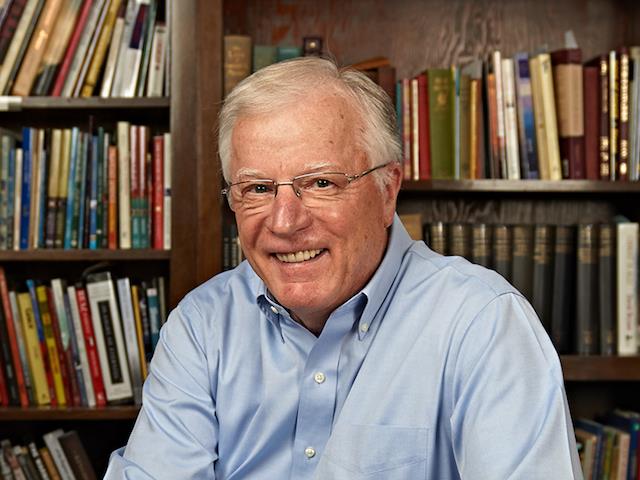
Sooner or later, death touches everyone, and we need a hope that lasts. Paul faced his death with courage because of his trust in God. In this message, Pastor Lutzer retraces Paul's footsteps to his fearless view of death. The death of God’s people is always under the sovereignty of God.
Dave McCallister: Let us run with endurance the race that is set before us, looking to Jesus, the founder and proclaimer of our faith. In Greek, the word witness is the word known in English as martyr. In the early church, dying for Christ went hand in hand with being his witness. Paul the apostle went to his death in Rome, sealing that witness with his blood. Today, a final look at his legacy. From the Moody Church in Chicago, this is Running to Win with Dr. Erwin Lutzer, whose clear teaching helps us make it across the finish line. Pastor Lutzer, is it true that Paul's strategy all along was to get to Rome, knowing he'd likely pay for his faith with his life?
Dr. Erwin W. Lutzer: Dave, not only was it Paul's desire, but apparently it was also God's desire. When the apostle Paul was in Jerusalem, he was assured by the Lord that he would get to Rome. And aren't we glad as we think of Paul's continuing ministry in that city and, of course, the book of Romans. I'm holding in my hands a very special offer. We're doing this in order to help you in your spiritual journey. It's a book I've written entitled Failure the Backdoor to Success. Let me read some of the chapter titles. How much can God forgive? Do we get by scot-free? The detour can lead to the main road. Is there a price? Another chapter, I'm so messed up. I think that this book is going to be of help to you. And after you've read it, you'll want to pass it along to someone else. Here's the contact info. Go to rtw offer.com or call us at 1-888-218-9337. Now, let's go to the pulpit of Moody Church and following this message, stay tuned because I'm going to be giving you that contact info again. The title of this message is Dying with Christ or we could call it Dying for Christ. It's the last in a short series of messages entitled The Legacy of a converted man. The impact of the apostle Paul on Christianity is second only to the Lord Jesus Christ. And we are going to be talking about death. If you know someone who has a terminal disease or you may have one, or perhaps someone who is facing death right now, this is the message for you. You've come to the right place today because we are going to be talking about death and Paul's view of death. But before we get there, as many of you know, about 60 of us had the opportunity to travel to Greece and to Turkey and to follow to some extent the footsteps of the apostle Paul. So, in order to lead up to the topic of death and martyrdom, we're going to just give you a very brief look at some of the places that we have been. We began our tour in Athens, climbing up to the top of Mars Hill where the apostle Paul preached his famous sermon. Now, when he was there on Mars Hill, you remember he spoke to the Epicureans and he spoke to the Stoics and he gave them the gospel. But you know, when we were there, I learned something. I understood better now why it is that when Paul preached the gospel and the resurrection, they mocked. And the reason that they did is based on Plato, many of the Athenians believed that the soul is imprisoned in the body and therefore death is actually a release. So, when they thought of loved ones, they didn't celebrate the birthday of their loved one, they celebrated the death of their loved one. So, why would anyone want to be resurrected? So, when Paul preached there, some mocked. The Bible says some believed and some said, we'll hear you again of this matter. It is there in Athens that we learned about the preaching of the gospel. Then we traveled about 60 miles to Corinth. It is here where the apostle Paul was brought to the judgment seat. The story is in the 18th chapter of the book of Acts and there was a riot that began. He's brought to the judgment seat, the bema. You can actually see the bema today and there is even a post there before the bema where we knew Paul stood. But you know, before we left Corinth, we learned something else. We all know that in Corinth there is a great Acropolis. That is a huge hill. Well, there were a thousand temple prostitutes that lived on that hill. Corinth was a very very evil city, obviously, and at night they would come down into the city and they would be looking for worship, not just sexuality, but worship. And when you had that sexual relationship with them, you were worshiping them. That's why paganism is so powerful. It's because paganism links spirituality and sexuality in such a way that it distorts the worship of God. But these women, these women would be shorn. They would be basically bald-headed and they would go into the city looking for these worshipers. But after they were converted, they'd come into the church. And that 's why the apostle Paul in 1 Corinthians 11 goes through such a long discussion regarding women being veiled in church. You know, sometimes Paul is spoken of as someone, you know, who was oppressive to women. Do you realize what he was saying there? He was saying that all women should be veiled so that when these women who have been converted come into the church, no one would look upon them as shameful, but they would be given the same dignity as other women. And that's why the apostle Paul talks about the need of veiling women. By the way, it was also necessary for them to leave the life of prostitution to be purchased out of the temple worship community. Who is it that paid their price? Well, we don't know for sure, but we have a guess. His name is Erastus. Erastus is mentioned three or four times in the book of Acts and the epistles. And And he was a wealthy man. And did you know that archaeologists actually found an inscription to him there in Corinth? And it says this is Erastus and I paid for this pavement with my own money. He was a wealthy businessman to whom Luke and Paul looked for financial help. So, you see that the church there in Corinth represents the power of God. Athens, we have preaching the gospel. Corinth, we have the power of the gospel. That's why Paul says when he came to Corinth, I knew nothing among you except Jesus Christ and him crucified. And people in the most debauched situation converted, welcomed into the church as daughters and sons of God Almighty. Then we leave Greece and we go to Turkey and Ephesus. Now, the ruins of Ephesus go on for perhaps a half mile or more and only about 10% have been recovered. It is incredible to think what the ancients did. Paul was in Ephesus for 2 years and a riot ensued because of the fact that Demetrius, who was a silversmith, was losing business. Nobody was buying his idols. So, as a result of that riot, the apostle Paul was taken and actually dragged into the theater. The whole story is there in the 19th chapter of Acts and we were in that theater. Now, it's been rebuilt, holds about 10,000 people, but it is there that we contemplated all that Paul did for the cause of the gospel. But here is an insight I had not really thought of before. When you're there in Ephesus, the Bible says that through the church in Ephesus, all of Asia heard the word of God. And I used to think to myself, how is that possible? Well, because Ephesus was a seaport and a trade city, there were about 60 different languages represented there and the gospel went to all of these all throughout Asia, Asia Minor, which is Turkey today. I was just struck by the fact the miles that people had to travel in those days without buses and cars. For example, the distance from Ephesus all the way to Bithynia where we also were. I don't know, 3 400 miles. And yet when Peter wrote his gospel, you remember he says to the saints which are in Bithynia and Galatia and Cappadocia. And it is there in Cappadocia that the gospel also went, which is in central Turkey. What an experience it was for us to be there and to be able to see the caves in which the Christians lived and worshiped. There are many churches that are in caves, but more than that, we went to an underground facility dug out by these ancient believers. Now, you can't get your mind around it because it goes down 12 stories. We went only to story number three or story number four. Of course, there were baptismal fonts along the way. All of these tunnels. The city that we were in, the underground city, it is estimated held a thousand people. And when the Romans came, you know, the Christians had scouts to see when the Romans were coming. We're talking about the fourth and fifth centuries. One Roman leader said, I came to the city and there was nobody there and it looked as if they had just left. They had all hidden. They had They showed us the ventilation system. They had enough food down there to survive and attack. And then when we were in a place, in a room, and there are dozens of rooms where they worshiped. I read these words to the group. Some were tortured, refusing to accept release so that they might rise again to a better life. Others suffered mocking and flogging, even chains and imprisonment. They were stoned. They were sawn in two. They were killed with a sword. They went about in skins of sheep and goats, destitute, afflicted, mistreated, of whom the world was not worthy, wandering about in deserts in mountains and dens and caves of the earth. Our minds just try to get around the kind of suffering that Christians endured in previous centuries. Cappadocia. And then from there we went to the church of Holy Wisdom in Istanbul, ancient Constantinople. I'd been there before. You know that you have no idea how big this church is, but notice that it does have minarets. And until you actually go inside and you stand in the balcony, you really can't fathom the size of this church. And then if you walk around on the other side, you will come to some crosses that are defaced because the Church of Holy Wisdom is not a church today. It belongs to Islam. It became a mosque in 1453, a mosque for 500 years. Now, it's more like a museum so that we can go into it. And the reason that the crosses are defaced, though you see where the crosses are, the images, is because a devout Muslim guide said no Muslim can ever pray in the presence of a cross. I want you to just think about it. By the way, that's the church that inspired our own architecture. We are basically a Byzantine church. We could see at least some similarities. But let me tell you the story, okay? It's a Christian church dedicated in 535 by Justinian the Emperor. It's 1,500 years old. He said, Oh Solomon, I have outdone thee. It's bigger than Solomon's temple. So, it is the largest church in Christendom until 1453. For 900 years, Muslims overtook the Muslim Turks. The people crowded into the church thinking God would protect them. He didn't. There was a huge massacre in the church and a massacre throughout the city of Constantinople. 5,000 people were impaled, one of the most painful ways to die. And then, of course, all of the sayings of Jesus were taken down. And today, various comments and so forth from the Koran, the name of Muhammad and so forth. Imagine that with four minarets, church dedicated to Christ, Islamic today for 500 years. And then we went to Nicaea where the first council of Nicaea was held. That building is no longer standing, but we were able to see also a Church of Holy Wisdom also built by Justinian, also being a mosque. As you can tell, the minaret and in 787 in 787 this is the church where the seventh ecumenical council was held and you can actually see where the bishops sat. Now, this church had an experience that it did not have, I'm sure, for 600 years ever since it became a mosque. My lovely wife Rebecca insisted that she read some scripture in this mosque. So, she read it to us as a tour group about the exaltation of Jesus from John chapter 1 and Hebrews chapter 1. The guide said that in all of his years of guiding is the first time he had ever heard scripture read in a mosque. Well, we prayed that someday that mosque would become a church again, which leads me, of course, to the topic of persecution. It leads me to the topic of death and martyrdom. In 2012, Newsweek magazine had a cover story in which it said that there is a river of blood flowing throughout the Middle East. And as we traveled throughout the Middle East and we traveled, of course, especially in Turkey, we saw many churches that are mosques today. And the river of blood is against Christians who are dying simply for the fact that they are Christians. Now, as I frequently say, if you are here today as a Muslim, not only are you welcome, but we're not blaming you for what is being done in the name of your religion. You know, here in America we have a more tolerant kind of Islam. It's been westernized, but in those countries where there is a purer version of Islam, what you find is a tremendous amount of persecution. If we could just for a moment get our minds around things like this in Pakistan, a Christian man is killed for marrying a Muslim woman. A girl is pulled out of her house because she said she follows Jesus and is killed. Did you hear on the news migrants migrants on a boat, 12 Christians were thrown overboard for praying and they were not praying to Allah. Nigeria, whole churches wiped out and massacred. I'm going to speak today about Paul's view of death because the apostle Paul, he was martyred by Nero. The Bible doesn't say that expressly, but church history and tradition says it happened. And we have every reason to believe that that is correct. So, I want you to take your Bibles and turn to Philippians chapter 1. Philippians chapter 1 where the apostle Paul is speaking about his view of death. How do we as Christians look at death? You know, Jesus predicted that in the last days that persecution would increase. And not only that, when we think of Isis, for example, we're reminded very clearly of the antichrist. What Isis is doing is what the antichrist is going to do, namely killing, marginalizing anyone who does not go along with them, that does not pray to their God of Allah. And that is what is going to be happening worldwide. The Bible says regarding antichrist, all who dwell upon the face of the earth shall worship him except those whose names were written in the Lamb's Book of Life. And they who do not worship will be killed with the sword. Well, that sets us up for Paul's view of death as we conclude this brief series on the legacy of a converted man. I'm in Philippians chapter 1, Philippians chapter 1 where we see here that a Christian views death differently. We see that Christians value Christ when they die. Look at the text, verse 20 of chapter 1 of Philippians. As it is my eager expectation and hope that I will not be at all ashamed, but with full courage now as always, Christ will be honored in my body, whether by life or to death for me to live as Christ and to die as gain. When you and I die, we can have an opportunity of valuing Christ. And Christ can be more to us than our families, our wives, our children because to die for the Christian is a win. To die is gain. Think for a moment now if we substituted a different word here. For me to live is money and to die is what? I guess to lose it all. For me to live is fame and to die well, that's to end it. And it won't matter whether I was famous or not. For me to live is pleasure and to die is what? What do you put in if for you to live is pleasure? Paul says for me to live is Christ. To die is a gain. He says in the next verse that to be with Christ is far better. Whenever I see people grieving over death, first of all, let me say that it is perfectly permissible and natural to grieve. And there is such a thing as good grief. Good grief is when we indeed grieve over a loved one that has died. Bad grief is when we continue in that vein of grieving even year after year. And we forget that death is the chariot that God sends to bring his own children home. I frequently said at funerals that if that person who died in Christ could come back, they'd say, uh-uh. I love my family. I love my children. But I've seen Jesus. And the Bible says eye has not seen, neither has ear heard, neither has it entered into the heart of man those things that God has prepared for them that love him. Jesus is more valuable to us than life itself. Cyprian, who lived in the 300s, said that the reason that Christianity was so successful in North Africa in the early centuries is because the Christians died differently. He said that the plagues were the best thing that happened because in the plagues the pagans, they grieved, but they grieved without hope, whereas the Christians had hope. And the pagans would say, where's that hope coming from? Well, it's coming from the fact that to live for Christ is one thing. And when you and I die, we gain. Wow.
Dave McCallister: You know, my friend, when we are in Jesus Christ as our savior, Lord, he takes us all the way to glory. Meanwhile, along the way, of course, we often times stumble, don't we? I'm holding in my hands a book I've written entitled Failure the Backdoor to Success. One of the questions is this. When is it too late to begin to really live for Christ? Well, the answer, of course, is right now. If you aren't living for Jesus Christ, if because of discouragement you've turned away from the faith, I think that this book will help you getting back on track and reminding yourself that there is more grace in God's heart than there is sin in our past. For a gift of any amount, we're making it available for you. And by the way, this is the second to last day that we're doing this. Here's what you do. You go to rtw offer.com. That's rtw offer.com or call us at 1-888-218-9337. Meanwhile, I want to thank you so much for your love, for your support, for the recognition that the ministry of Running to Win exists only for the glory of God. And we seek to reach as many as possible with the good news of the gospel. But this is not our ministry. This ministry belongs to God and, of course, it could not be possible were it not for God's people supporting us, praying for us, and cheering us along as we run together toward that finish line. But here's a resource that will help you. Go to rtw offer.com. Remember the name of the book, Failure the Backdoor to Success.
Dave McCallister: You can write to us at Running to Win, 1635 North La Salle Boulevard, Chicago, Illinois 60614. What kind of legacy will you and I leave behind? Next time, some final thoughts about death and how Christians should face it. Thanks for listening. This is Dave McCallister. Running to Win is sponsored by the Moody Church.
Related Episodes
Dying with Christ – Part 2 of 2
Friday, October 9
In Prison For Christ – Part 2 of 2
Wednesday, October 7
In Prison For Christ – Part 1 of 2
Tuesday, October 6
Related Videos
About Running To Win
Running the race of life is hard. But with the Bible front and center and a heart to encourage, Pastor Erwin Lutzer presents clear Bible teaching, helping you make it across the finish line. Since 2011, this 25-minute program has provided a Godward focus and features listeners’ questions.
About Dr. Erwin W. Lutzer
Dr. Erwin W. Lutzer is Pastor Emeritus of The Moody Church where he served as the Senior Pastor for 36 years (1980-2016). He earned a B.Th. from Winnipeg Bible College, a Th.M. from Dallas Theological Seminary, a M.A. in Philosophy from Loyola University, and an honorary LL.D. from the Simon Greenleaf School of Law (Now Trinity Law School).
A clear expositor of the Bible, he is the featured speaker on two radio programs: Running to Win—a daily Bible-teaching broadcast and Songs in the Night—an evening program that’s been airing since 1943. Running To Win broadcasts on a thousand outlets in the U.S. and across more than fifty countries in seven languages. His speaking engagements include Bible conferences and seminars, both domestically and internationally, including Russia, the Republic of Belarus, Germany, Scotland, Guatemala, and Japan. He has led tours to Israel and to the cities of the Protestant Reformation in Europe.
Pastor Lutzer is also a prolific author of over seventy books, including the bestselling We Will Not Be Silenced, One Minute After You Die, and the Gold Medallion Award winner, Hitler’s Cross. Pastor Lutzer and Rebecca live in the Chicago area and have three grown children and eight grandchildren. Connect with Pastor Lutzer on X (@ErwinLutzer) or moodymedia.org.
Contact Running To Win with Dr. Erwin W. Lutzer
Mailing Address
Moody Church Media
1635 North LaSalle
Chicago, IL 60614
Toll-free Phone Number
1.800.215.5001
Monday – Friday
8:00am – 5:00pm CST
Fax Number
1.312.642.4904


