Behind the Curtain
Ministries > Leading The Way with Dr. Michael Youssef
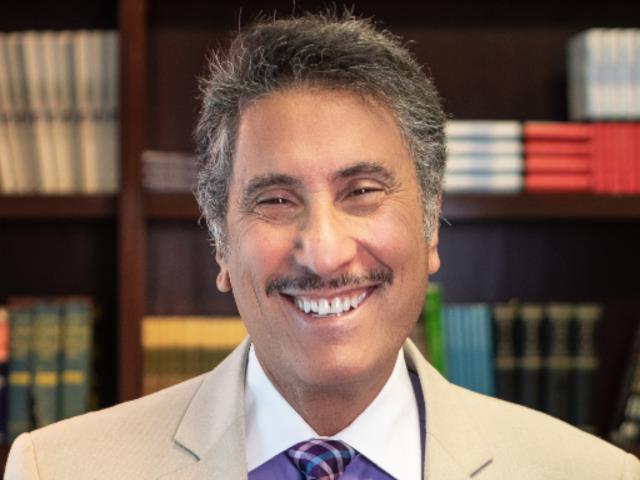
Join Dr. Michael Youssef for the next Leading The Way when he offers a change of perspective on death through his message, Behind The Curtain!
References
Guest (Male): Thanks for joining listeners across six continents for Leading The Way with Dr. Michael Youssef. The topic of death is often avoided. Even Christians with deep roots of faith sidestep talking about mortality. But up next, Dr. Youssef offers you a change of perspective through a message he's called "Behind the Curtain" as he opens to the words of Jesus, looking at how he described what really is behind the curtain of death. Learn more about the expansive worldwide ministry of Leading The Way at LTW.org. You can order resources or express your generosity when you call us at 866-626-4356. Do that later, though, because right now you'll want to hear every word from Dr. Michael Youssef as he begins this episode's unique teaching. Listen with me.
Dr. Michael Youssef: I know that our culture sees death as a morbid subject, so much so that even preachers try to avoid it. As always, I don't have an opinion on the issue, but even if I do, it's worthless anyway. The only thing we know about what really happens is what the word of God in its entirety has told us. Now I want you to turn with me, please, to Luke 16, beginning at verse 19 and the words of the Lord Jesus Christ. Luke 16. Now there's something I want to clarify right at the beginning here, because there are some people who mistakenly think that the man who's in the torment ended up there in Hades because of his riches. The Bible from cover to cover does not condemn riches. Only socialists do. They want to spread the wealth. It is what you do with riches that the Bible speaks about. Abraham was a very wealthy man, and he was a man of faith and a model for all of the Old Testament saints. Joseph of Arimathea was a very wealthy man. But what Jesus is telling us in this story is not condemning riches, but he's condemning the greed and the selfishness and the self-centeredness and the carelessness by which this man lived his life. Jesus was telling those Pharisees to whom he was speaking that riches cannot save them. All of the wealth in the world will never help them go to heaven. Only Jesus Christ can get them to heaven. In this story, Jesus tells us about two different destinations of two different people. One lived for self and the other one lived for God. One worshiped self, the other one worshiped God. One's God was Mammon, and the other's God was the Lord. And so I have three things that I want to tell you about what's on the other side of the curtain. I don't have a theory, I don't have an idea, I only go to the word of God, okay? I don't have a denominational doctrine that I teach. No, I teach you what it says in the word of God, alright? Amen. First thing I want to tell you: what happens the second you die? Jesus gives us the answer. Both of these men went to two different regions of what the Old Testament would call Hades. You say, what is Hades? Hades was a place where people went prior to the death and the resurrection and the ascension of the Lord Jesus Christ. And it had two regions. One region of Hades was called the bosom of Abraham, and the other region was called the place of torment. Don't miss this. Both men were fully conscious after their death. The unrighteous man was conscious that he was in that region of Hades that has unbearable suffering in it. He had memories. He was able to speak. He was experiencing intolerable pain. Lazarus also, on the other side, in the other region of Hades, he had memories. He was able to speak. He was experiencing great joy. And so the unrighteous man said in verse 24, "Father Abraham, have pity on me and send Lazarus to dip the tip of his finger in the water to cool my tongue because I am in agony in this fire." So what is Jesus teaching us here? He's teaching us that we will receive our resurrected bodies as soon as we get out of here. There is no waiting period. There's no souls floating around. As a matter of fact, in 1 Corinthians chapter 15, verse 54, and in 2 Corinthians chapter 5, verses 2 and 3, the apostle Paul talks about us being clothed when we go to heaven. He's not talking about a designer suit or a designer dress. When he's talking about being clothed, he means that we're going to be clothed in our resurrected bodies. We're going to be clothed in our glorified bodies immediately as soon as we get to the other side. John the Revelator, when he was privileged to be taken into heaven and he saw what is going on in heaven even right now, he did not see souls floating around. No, he saw people in glorified bodies. The unrighteous man was burning in a fire. It was the fire of unfulfilled passions. It was the fire of unsatisfied desires. It was the fire of unsubsided lust. It was the fire of a tormented conscience, the fire of a raging guilt, the fire of a tormented mind. But as far as Lazarus was concerned, he was in a state of bliss with the man of faith himself, Abraham. As I mentioned earlier, the Old Testament, when it talks about Hades, refers to two regions. One is described as the bosom of Abraham, because by faith Abraham, as you see in Romans and Galatians, is always given as an example of a man who lived in the Old Testament and lived by faith. And that is how a person makes it to heaven. In the Old Testament or the New Testament, it's by faith. And so all the faithful Old Testament believers were with Abraham in that place, waiting for the death and the resurrection of Jesus Christ. And Peter tells us that he went there and he declared his lordship right after his resurrection. The other side was a place of torment. I remember a story of a sweet old lady who lived a good life and lived to a good old age, and she was getting ready to die. And the pastor came to visit her. And she was so excited about going to heaven. She said, "Pastor, it won't be long now before I'm in the bosom of Moses." And the pastor tried to correct her theologically and biblically, and he said, "No, sweetheart, it is the bosom of Abraham." She thought for a minute and she said, "Look, at my age, I don't care whose bosom it is." And that is why Jesus said that Abraham saw my day by faith 2,000 years before Christ and therefore he was saved. And there are the believers who are going to be in heaven with us, they're the ones who looked forward to the coming of Christ. And we in the New Testament, we're going to make it to heaven by looking back to the cross of Jesus Christ and believing in him. Amen. The second thing I want to really get under your belt and that it will bless you and encourage you is about what happens one second after you die when that other side of the curtain we call life is drawn. The distance between them is irrevocably fixed. He says between us and you, a great chasm has been fixed, so that those who want to go from here to you cannot, nor can anyone cross over from there to us. What is Jesus saying? Listen carefully. Once we cross over the other side of eternity, you cannot decide to pack your bags because you don't like the accommodation and you want to go to the other side. And that is why the death of the believer, while it is absolutely painful for the ones who are left behind, it is joyous for the one who makes it across. Why? Because there is no waiting place. There is no soul sleep. There is no purgatory. It's a matter of checking out of here and checking in there. And Jesus said to the thief on the cross, he said, "Today you're going to be with me in Paradise." There's no waiting time. There's no soul sleep. He said today you're going to be with me in Paradise. I know there are some people who are so determined about soul sleep, they even twist the grammar and the syntax of that text of Jesus. And they say, "No, what he really meant to say is, I tell you today." Really? What other day is he telling him? They just want to prove a theory that they have. As I told you, I've got nothing to prove. Jesus said "today," meaning today. As soon as you close your eyes in death, you're going to be with me in Paradise. You're going to be with me in heaven. Hear me out on this one. The reason the Bible speaks of the believer's death as sleep is because death is restful for the believer. Think about it. We're going to rest from fighting temptations. We're going to rest from struggling with sin. We're going to rest from constantly facing troubles in this life. We're going to rest. Let me ask you this. If the soul goes to sleep and does not immediately go to heaven and be clothed in a resurrected body, be clothed in a glorified body, let me ask you this: What are you going to make of the Mount of Transfiguration, where Moses and Elijah came and they sat there with Jesus? They were not floating souls, let me assure you. Because if they were floating souls, Peter would not have gotten excited like he did. I mean, man, this boy was salivating. He said, "Hey, let's stay here. We don't want to go down there again." I mean, these glorified bodies of Moses and Elijah and the Lord Jesus Christ—he saw that glory and he said, "Let's make tents. Let's stay here. I don't want to go down again. I don't want to go to fishing." When Stephen was getting ready to die, he saw the Lord Jesus Christ standing there to receive him in heaven. If the soul goes to sleep—listen to me—if his soul goes to sleep, what is that thing that he saw, Jesus welcoming him? Paul expected to be in the very presence of the Lord Jesus immediately as soon as he dies. Not a soul that goes to sleep and waits for the resurrection or some time in the by and by. No, it's an immediate transformation. And that is why he said in Philippians 1:23, "I desire to depart and be with Christ, for it is far better." Not to go and get my soul to sleep somewhere and then at some point I'm going to be with Christ. He said it is an instant transformation. He did not long to die so he could get his soul into some comatose state. He longed for death because he knew that it would mean an immediate and absolute presence with Christ in heaven in a glorified body. While Paul was torn between staying here on earth so he could win more people to Christ, so he could encourage the church of Jesus Christ, but he really deep down wanted to go to heaven. And he made it very clear that he has a preference, and it is heaven. He was confident that his death meant presence with Christ in a resurrected body. 2 Corinthians chapter 5, verse 8, here's what Paul, here's what he said. He said to be absent from the body is to be at home with Christ. Again, sleep is just a picture of a believer's death because just as sleep causes rejuvenation, so does the death of the believer. Have you ever been so tired, so exhausted that you couldn't wait to sleep? You're so tired. That's the idea here. Revelation 14:13, "Blessed are the dead who die in the Lord from now on. They will rest from their labor, and their deeds will follow them." 2 Corinthians chapter 5, Paul describes this body, our physical body that houses our spirit, as a tent. He calls it a tent. There's a good reason for that. And I'm going to show you a contrast that you may not have thought about before. The reason Paul calls this a tent is because a tent deteriorates. A tent sags. A tent can be tattered. Listen, no matter how much we try, and I'm trying my best, but it's going to sag anyway. And a tent eventually is going to collapse. Look, I know some of you love to go out camping in tents and all that stuff. God bless you. I wish you all the best. But listen, here's why he said it's a tent. Because it reminds us of the temporary nature of our pilgrim here on earth. That's why. And that is why Jesus said when he goes, he prepares a mansion for us. And if you're thinking that you're going to get to heaven and you're going to get a 50,000-square-foot palace and you're going to really live it up, I want to disabuse you of that thought. When he says he prepares a mansion for us, he is preparing a glorified body for us. And that glorified, magnificent resurrected body is a mansion in comparison to this one, which is a tent. Who wants to live in a tent when they know they've got a mansion coming? When I go into glory, I'm going to exchange this sagging tent for a magnificent mansion, a magnificent body without limitation and without pain. The comparison between the tent and the mansion is incredible. Think about that, meditate on that for a long time. The third thing I want to tell you that Jesus wanted us to know about eternity here in Luke 16 is that in eternity, we're going to have a heightened self-awareness. This self-centered man, this man who lived for self, this man who cared for nobody else, this man who had no room for God in his life—this man, when he got there into that place of torment, he knew that he deserved to be there. He knew that he had received his just and fair recompense. In eternity of torment, this self-centered man has a heightened self-awareness of his sin, of his rebellion, of his selfish living, of his self-centered living. And so after a few moments in the place of torment, he became a great evangelist. Verses 27 and 28, he said, "Send Lazarus to my father's house, for I have five brothers. Let him warn them, so that they may not also come to this place of torment." Please don't miss this, don't miss this. This man did not say, "God, you gave me a raw deal. God, you're unfair. God, you're unjust." I know you see people today shake their fist at God and say, "Where's God when this?" and "Where's God in the angry at God?" but this man has a heightened self-awareness. He did not blame God at all. He said, "I know I deserve to be here." Not only that, but he was deeply concerned about his five brothers who were still on earth. He longed. He longed for them not to join him in that type of eternity, in that fate. And all of a sudden, a selfish, self-centered man becomes selfless. And he began to think of his brothers. In fact, he pleads with Abraham. Look at verse 30. He said, "I know if someone from the dead goes to them, they will repent." So repentance—he knew repentance now that he's on the other side. Verse 31, Abraham said, "If they don't listen to Moses and the prophets, they will not be convinced even if someone rises from the dead." You know, you hear people say, "Oh, they want to see miracles. If they see miracles, they will believe." Let me tell you something. Abraham is saying if you're not going to believe the Bible and if you're not going to take God at his word, even if you see a miracle, you're not going to believe. This man knew that the decision we make here in this life on the earth regarding our relationship with God will determine our eternal destination. With heightened perception and better understanding, he becomes aware that our relationship with God should be our highest priority while we're living on this earth. And yet I see even believers today, they live their lives focused on all sorts of things and they leave God out. They are people who spend their money on themselves, on all sorts of things, and they leave God out. People who set all sorts of goals and plans for their life, ignoring God. People who make their plans and pay no attention to God's redeeming grace. All of us, if we're going somewhere, traveling to a place that we've never been before, whether it be vacation or whatever it may be, people get maps and study them. They get on the internet and they Google that map. They Google this place. They read about it. They read books and find out more about it. They even go and find reviews, what other people are saying about it. How much more should we be prepared and preparing for the place where we're going to be forever and ever and ever and ever and ever? And you can't get a better review than the one who's been there and came back to tell us about it. Let me tell you, some of these preachers running around saying there's no hell? I've got news for you. I'd rather put my money on the one who went there and came back and says there is hell. My money's on Jesus. But there may be someone here today who would say, "I'm really uncertain. I believe in Jesus, but I'm really not sure if I close my eyes in death today whether I'll be in heaven or not." Well, chances are if that's your answer, you really have not placed your total, complete trust in his promise. In a moment, I'm going to pray. And I'm going to pray with that person who would say, "I'm not really sure, but I'd like to be." You can be assured and insured today. Lord Jesus Christ, I come and anchor my hope in your promise. I come to you repenting of my sins, receiving you, Lord Jesus, as the forgiveness of my sins, that what you did on the cross was for me. I thank you that your promise is not just that you're going to dwell in me in this life, but I'm going to spend eternity with you. And that is the absolute sure word of yours that nobody else can ever change that. In your name I pray, Jesus. Amen.
Guest (Male): Is your hope anchored in Jesus' death and resurrection? Maybe you have questions about what's behind the curtain for you in death. Well, begin a conversation with the Leading the Way pastor or counselor today. Start by filling out a contact form at LTW.org/Jesus.
Guest (Female): My journey to faith started in my late 20s. I was in graduate school; I was working on my doctorate in education. Then I started reading poetry and the philosophers, looking for truth. But then I met somebody who told me that God loved me, and I thought that's crazy. He couldn't love me. But it starts in the Old Testament because he gave me the Old Testament to read; he gave me the Psalms. And so I started reading through the Psalms, and I knew that I knew that I knew that I was reading the truth. The word of God changed me. My dissertation focused on race relations in higher education, and I looked at discrimination. And it surprised me. And I was looking for suitable ministry work, as the Lord would have it, he brought me to Auschwitz-Birkenau, the former Nazi German concentration and death camp. And I volunteered there for four months. I went into Auschwitz five days a week, and they had me working with artifacts. In my mind, it was really God who was entrusting me with these last belongings of the Jewish people who died. I learned a lot at Auschwitz, and honestly, I needed all the help from Dr. Youssef. When I was working at Auschwitz, I needed that teaching and encouragement. I listened to him every single day. As I'm winding down my day, I put him on; I'm listening to him every night. Then I discovered I could hear sermons on it. He's a breath of fresh air, and he understands the Middle East and the people that I work with. His voice is Middle Eastern, he's Egyptian, he speaks in poetry, yet he's this intellectual and he has an earned PhD, which I really respect. He teaches a teacher. I need to be taught. We call them educational multipliers because then what he puts into me, then I go out and teach other people who are going to be teachers, and it just grows exponentially. I'm here in Atlanta now, and I listen to my sermons from Leading the Way, from Dr. Youssef, and I need it. It's my launching pad, but I'm well-equipped. I'm fortified. I thank God for him.
Dr. Michael Youssef: Yes, he loves you!
Guest (Male): Stand with Dr. Youssef in eternity-minded generosity when you give us a call at 866-626-4356. Or remember you can always visit us online. We're at LTW.org. This program is furnished by Leading the Way with Dr. Michael Youssef, passionately proclaiming uncompromising truth around the world.
Related Episodes
A Giving Heart
Monday, August 10
Deepening Relationship
Friday, August 7
Creating Intimacy
Thursday, August 6
Related Videos
About Leading The Way
Along with partners committed to changing the world, Dr. Michael Youssef is leading the way for people living in spiritual darkness to discover the light of Christ. By passionately proclaiming uncompromising Truth through every available form of media, this international team of experts is uniquely providing hope that is revolutionizing lives around the world.
What began as a small local radio ministry in 1988 has grown into an international ministry reaching millions for Christ, including a vast audience in the Muslim world seeking Truth in closed countries. Dr. Youssef's Biblically-based programs are broadcast in more than 28 languages to audiences across six continents. His books, MY Journal magazine, and daily e-devotionals continue to minister to a global audience. Leading The Way utilizes cutting-edge technology to advance the Gospel. Its solar-powered Navigators are reaching into remote villages, and the ministry's KINGDOM SAT TV channel—launched by Dr. Youssef in 2009—is reaching into the Middle East with programming in English, Arabic, and French. Field Teams follow up with viewers, including those in restricted areas, to lead the lost to Christ, disciple new believers, and support the underground Church.
Dr. Youssef and the Leading The Way team are committed to proclaiming the Good News of Jesus with the lost and equipping believers to grow in Christ. Learn how you can partner with this unique ministry today.
About Dr. Michael Youssef
Michael A. Youssef, Ph.D., is the Founder and President of Leading The Way with Dr. Michael Youssef, a worldwide ministry that leads the way for people living in spiritual darkness to discover the light of Christ through the creative use of media and on-the-ground teams. His Biblically-based teaching programs are broadcast more than 18,000 times per week in multiple languages around the world. He is also the Founding Rector of Church of the Apostles in Atlanta, Georgia, and founder of the AWAKE America prayer movement.
Dr. Youssef was born in Egypt and lived in Lebanon and Australia before coming to the United States. In 1984, he fulfilled a childhood dream of becoming an American citizen. Dr. Youssef holds theological degrees from Moore College and Fuller Theological Seminary and a doctorate in cultural anthropology from Emory University. He has authored more than 50 books, including popular titles Saving Christianity?, Life-Changing Prayers, Is the End Near?, How to Read the Bible, Heaven Awaits, and God’s Final Call. He and his wife reside in Atlanta and have four grown children and 15 grandchildren.
Contact Leading The Way with Dr. Michael Youssef
Mailing Address
Leading The Way
P.O. Box 20100
Telephone:
(404) 841-0100
Toll-free line
(800) 337-5323


